INTELLIGENCE ARCHIVE

Commentaries

29 published analyses, newest first.

COMMENTARIESAUGUST 20, 2026
01

Evergrande’s Fall Exposes the Deeper Fault Lines in China’s Property-Led Growth Model

The sentencing of Hui Ka Yan, Xu Jiayin, founder of the China Evergrande Group, to life in prison marks the conclusion of more than just the fall of one of China’s biggest businessmen. Hui was found guilty of eight offenses, including fraud, misappropriation of funds, securities violations, and bribery. Evergrande, formerly the largest real estate developer in China by contracted sales, turned to almost all of its $300 billion plus liabilities. Hui’s trial may mark the end of a significant legal case, but the Evergrande case does not end the massive economic case Evergrande came to represent. China’s real estate bubble was not a tale of just increasing house prices. It involved a tightly connected system of households, developers, banks, and local governments. Property became the main wealth purchasing and saving vehicle for Chinese households. In a survey by the People’s Bank of China, 59.1% of urban households’ assets were held in the form of housing, and the home ownership rate was 96%. Increasing house prices had an effect beyond an increase in construction. House prices had a positive effect on household wealth perceptions, confidence, and consumption. For developers, the system was designed to incentivize expansion. Land was bought and presold apartments, loans made it possible for developers to start new projects, and growing property evaluations enabled more borrowing. Evergrande was one of the developers who pushed the system the farthest. It can be described as the “three highs” consisting of high turnover, high costs, and high leverage. Evergrande’s model was to raise capital, buy land on a massive scale, and begin development while also borrowing against their land and starting the cycle over. So long as lenders continued to lend and buyers continued to buy, investors and developers alike continued to benefit from the cycle and the land and housing prices continued to grow. Local government interests were aligned with the developers. After the 1994 tax-sharing reform, the central government gained more revenue, leaving local governments shouldering a greater financial burden. To offset some of the burden, local governments sold land to developers and used land as collateral for loans. By 2019, it is calculated that local governments’ reliance on land finance was at 38.6 percent, with over 50 percent in many large cities. Property prices and local government finance and debt fuelled a cycle of increasing infrastructure spending. This outlines how vital property investment became for China. The IMF put the contribution of property to the economy at up to 20 percent. However, this number does not even come close to capturing the extent of property’s reach. Building property creates the need for the transport of raw materials. That includes steel, cement, and glass, as well as the machines to build the property, appliances, and furniture. Glass and machinery need to be transported using logistics and financial services. Property building employs contractors. Developers take out mortgages and corporate loans. Local governments earn money from the sale of land. So, property not only includes one of many sectors of the economy, but becomes a complete economic system. It becomes very clear how this system would collapse if the opposite of what is expected were to occur. This is the nature of a bubble. Every apartment does not become worthless. It means that the cost of the property, along with construction and the loans used to finance the purchase, became more dependent on whether people thought the price and demand for property would continue to rise. If people begin to think the cost of property will fall, then the same thing happens in the opposite order. Buyers will delay purchases, developers will not earn presale income, government revenue will fall, and banks will be more cautious of extending loans. Beijing recognized the risks so they began to tighten financial regulations starting in 2016. In 2020, The “Three Red Lines” Framework was established. Beijing’s goal was to limit debt for highly leveraged developers. From a macroeconomic standpoint it was necessary to limit debt. The problem was that leverage had become endemic throughout the system. It was really wishful thinking that it would discipline poorly managed developers because it made the business models of other driven companies more dependent on constantly selling new property and taking out new loans to continuously refinance debt. Evergrande exemplified the most famous case of China’s real estate collapse. Their failure impacted far more than themselves. Suppliers weren’t getting paid, construction companies went bankrupt and halted their projects, buyers had to wait to get their newly financed homes, and the creditors began to doubt the feasibility of their investments. Media states that Evergrande’s liquidation is slow and only $255 million of assets were sold by August of 2025 with claims against those assets totalling $45 billion. The possibility of China suffering a sudden replication of America’s 2008 “Lehman moment” is low. China’s financial system is more state-controlled, and the major banks are capable of being directed to provide support. Further, the capacity of Beijing to avoid excessive failure is far higher than the capacity of America at that same part in its history. The more likely threat is a prolonged balance-sheet adjustment where weakness in the property market will slow economic activity for many years. This trend continues through 2026. In July, Chinese new-home prices fell by 3.2% compared to the previous year. Of the 70 cities monitored, only 17 showed an increase in prices from the previous month. The first 7 months of the year also showed declining trends in property sales, investment, and new construction. During this period, the revenue of the Chinese government from land sales declined by 31.5% and was recorded at 977.8 billion yuan. These figures show a weakening trend in property and reflect declining private investment and local government finances. This trend is most problematic for households. When the primary investment of a household falls in value, households become more conservative. Household wealth falls and household members that own houses feel poorer, even if they have no intention of selling.

TR
Team Red Lantern AnalyticaAnalyst
arrow_outward
𝐀 𝐃𝐢𝐯𝐢𝐝𝐞𝐝 𝐇𝐨𝐮𝐬𝐞 – 𝐋𝐞𝐠𝐚𝐜𝐲 𝐯𝐬 𝐑𝐞𝐚𝐥𝐢𝐭𝐲: 𝐅𝐫𝐚𝐜𝐭𝐮𝐫𝐞 𝐢𝐧 𝐍𝐒𝐂𝐍 (𝐈𝐌) & 𝐑𝐢𝐬𝐞 𝐨𝐟 𝐭𝐡𝐞 𝐑𝐢𝐯𝐚𝐥 𝐏𝐫𝐨𝐯𝐢𝐬𝐢𝐨𝐧𝐚𝐥 𝐆𝐨𝐯𝐞𝐫𝐧𝐦𝐞𝐧𝐭 𝐢𝐧 𝐌𝐲𝐚𝐧𝐦𝐚𝐫
COMMENTARIESJULY 25, 2026
02

𝐀 𝐃𝐢𝐯𝐢𝐝𝐞𝐝 𝐇𝐨𝐮𝐬𝐞 – 𝐋𝐞𝐠𝐚𝐜𝐲 𝐯𝐬 𝐑𝐞𝐚𝐥𝐢𝐭𝐲: 𝐅𝐫𝐚𝐜𝐭𝐮𝐫𝐞 𝐢𝐧 𝐍𝐒𝐂𝐍 (𝐈𝐌) & 𝐑𝐢𝐬𝐞 𝐨𝐟 𝐭𝐡𝐞 𝐑𝐢𝐯𝐚𝐥 𝐏𝐫𝐨𝐯𝐢𝐬𝐢𝐨𝐧𝐚𝐥 𝐆𝐨𝐯𝐞𝐫𝐧𝐦𝐞𝐧𝐭 𝐢𝐧 𝐌𝐲𝐚𝐧𝐦𝐚𝐫

N𝐞𝐰 𝐏𝐮𝐛𝐥𝐢𝐜𝐚𝐭𝐢𝐨𝐧 | 𝐑𝐞𝐝 𝐋𝐚𝐧𝐭𝐞𝐫𝐧 𝐀𝐧𝐚𝐥𝐲𝐭𝐢𝐜𝐚 Red Lantern Analytica presents a new strategic analysis: “𝐀 𝐃𝐢𝐯𝐢𝐝𝐞𝐝 𝐇𝐨𝐮𝐬𝐞 – 𝐋𝐞𝐠𝐚𝐜𝐲 𝐯𝐬 𝐑𝐞𝐚𝐥𝐢𝐭𝐲: 𝐅𝐫𝐚𝐜𝐭𝐮𝐫𝐞 𝐢𝐧 𝐍𝐒𝐂𝐍 (𝐈𝐌) & 𝐑𝐢𝐬𝐞 𝐨𝐟 𝐭𝐡𝐞 𝐑𝐢𝐯𝐚𝐥 𝐏𝐫𝐨𝐯𝐢𝐬𝐢𝐨𝐧𝐚𝐥 𝐆𝐨𝐯𝐞𝐫𝐧𝐦𝐞𝐧𝐭 𝐢𝐧 𝐌𝐲𝐚𝐧𝐦𝐚𝐫.” Authored by Lt. Col. Ujjual Abhishek Jha, DCPP (Retd.), this examines the recent organisational split within NSCN (IM), the emergence of the Eastern Flank-led Provisional Government, and its implications for the Naga peace process, cross-border insurgency, and India’s security landscape in the Northeast. Download Link: A Divided House Legacy vs Reality Fracture in NSCM-IM and Rise of the Rival Provisional Government in Myanmar

TR
Team Red Lantern AnalyticaAnalyst
arrow_outward
Reimagining Oman as an Indian Ocean Green Hub: Looking at a Post-Carbon Future
COMMENTARIESAUGUST 21, 2025
03

Reimagining Oman as an Indian Ocean Green Hub: Looking at a Post-Carbon Future

The few stereotypes that persist regarding the Gulf are of its importance as a hydrocarbon centre over the past eight decades, since Bahrain and Saudi Arabia struck Oil in the 1930s. Oman, in comparison, struck Oil in Fahud in 1962, and shipped its first container from Mina Al Fahal in 1967. The oil revenues formed the bedrock of rebuilding the country during the 1970s, during which the Dhofar rebellion was still on. Oman is a Shell country, like Brunei, where Shell has been strategic in the country’s hydrocarbon exploration through a major stake in Petroleum Development Oman, or PDO, as commonly known. Many PDO employees have worked for Shell Brunei and Shell Sarawak as a part of their career circulations in the global MNC network. Oman was never a massive producer of petroleum as its wealthier neighbours in the GCC, even though its natural gas imprint is significant. Natural Gas is a key transition fuel, and Quriyat LNG in Sur has many long-term contracts with Korea, China, and Japan. However, Oil and Gas still form a major chunk of the GDP in Oman. Diversification has been on the agenda since the late 1980s, as localisation has always been a priority. Years of peak oil prices have led to the creation of avant-garde infrastructure and the education of a couple of generations overseas on scholarships, which was a byproduct of oil income. Now, the scenario has evolved as Oman’s population has increased, and the youth seeking work is often the refrain, as gauged from the comments section in the social media feeds. The cause of the Arab Spring protests in Sohar was corruption and lack of jobs, which led to a few heads turning. The post Sultan Qaboos era, under the able leadership of His Majesty Sultan Haitham Bin Tarik has moved towards diversification in a major way, seeking relationships far and wide. His Majesty has had meetings with the Dutch Leadership, President Putin in Moscow, Prime Minister Modi in Delhi, and the UK Minister Starmer within the past few months. The rich legacy of Oman being the Switzerland of the Middle East helps in its vital role in mediating the Yemeni crisis and as a trusted participant in the Iran paradigm, helps. Oman also controls half of the crucial Straits of Hormuz. Ibadhi Oman’s history as a littoral maritime empire has its long shadow in the present. Muscat is a diverse place, full of Zanzibaris, Baluchis, Ajmi’s, Lawati’s, and Hindu Bania’s, and other communities who were a part of the Omani imperial grid. The strategic culture of the Omani elite is transnational, with many Omani having ties across East Africa to Africa. Pankaj Khimji, an advisor to the Omani government, is a key Bania interlocuter between Muscat and Delhi via Mandvi. India and Oman have finalised the FTA negotiations recently. Aden was governed by the Bombay Presidency until 1937. These close ties entail prospects of power being exported to India/ Pakistan/East Africa via a subsea cable in the future. The engineering and program management excellence achieved by the national building efforts of PDO, especially in terms of talent development for the renewable sector, over the past decades. The first solar project was helmed by PDO as seen in the Amin Solar project. This is similar to the Aramco State, where the best expertise in Saudi Arabia lies with the engineers in the oil major. A glimpse of it was illustrated in Ellen R Wald’s book[1], which showed the role National Oil Companies have played in nation-building. Oman’s location as an Indian Ocean actor was confirmed with it hosting the Indian Ocean Conference this year in Muscat, where Member of Parliament Naveen Jindal ji spoke. Jindal operates one of the largest steel mills in the Middle East in Sohar. The ACME Group is coming up with a green hydrogen facility in the special economic zone in Duqm on the Arabian Sea coast. Duqm is also home to a naval base, which plays host to many navies, as it is close to the Horn of Africa piracy corridor. The green hydrogen corridor in Al Wusta and Dhofar is underway as ACWA Power from Saudi Arabia is investing in a green hydrogen facility in the southern Dhofar region. Another ACWA Power project in the form of Ibri 2 IPP is a project I know rather intimately. I was the lead social specialist for an impact assessment report for a multi-million-dollar 500MW solar park on the Saudi border. Long-term migrant workers from South Asia were identified as camel farmers in the desert on project land., However, during a recce visit and after speaking to long-term migrant workers looking after camels, we discovered that they were extremely precarious, relying on a solar-powered battery charger for mobile phones and to light a bulb. These workers, who were heavily reliant on precarious work, were being moved away from their off-grid homes to build a Chinese-funded solar park in relatively prosperous Oman. The irony was not lost on me. Globally accepted ESG governance norms kicked in, the move triggered an independent Resettlement Action Plan for these workers. Climate and Local developmental politics intersect in the middle of nowhere. The Beijing-based Asian Infrastructure Investment Bank or AIIB is the backer for the Ibri 2 Project, and Chinese contractors were the hands on Ibri 2. Belt and Road is right on our doorstep. Indian Engineers and Consultants work on these Chinese-funded projects as the technical hands behind the scenes. There are numerous other solar projects in the pipeline in the Wilayat of Manah. These areas are close to the Saudi Border and could be a part of an integrated GCC power grid. Oman’s great strength in terms of land needed for renewable projects is a plus, along with its positioning between the Gulf, South Asia, and East Africa, which makes it an Indian Ocean Green Hub[2] in the making. [1] https://www.amazon.in/Saudi-Inc-Arabian-Kingdom%60s-Pursuit/dp/168177660X [2] https://mem.gov.om/en-us/Our-Business/Renewable-Energy-and-Hydrogen/Renewable-Energy-and-Hydrogen-Projects Authored By: Manishankar Prasad PhD Scholar, University of Malaya

TR
Team Red Lantern AnalyticaAnalyst
arrow_outward
When The Dragon Meets The Elephant In Africa
COMMENTARIESMAY 27, 2025
04

When The Dragon Meets The Elephant In Africa

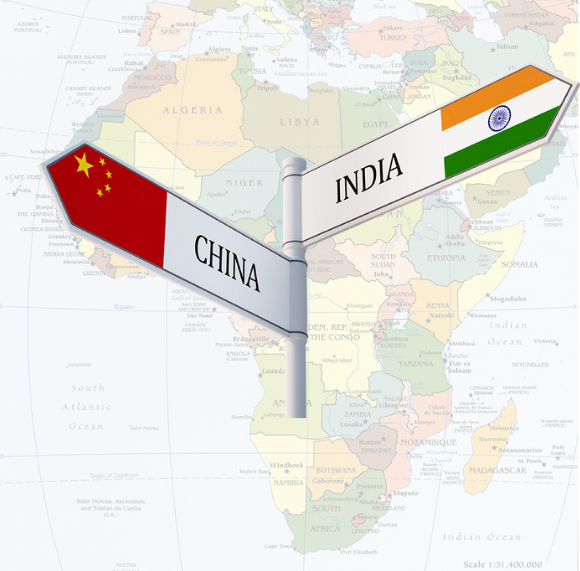
In 2023 the world witnesses a watershed moment in geopolitics when under the presidency of India. The African Union joined the G20. This move was more than symbolic as it reflected the continent’s growing geopolitical relevance and the shifting axis of global power toward the Global South. But this inclusion also sharpened the spotlight on a silent contest already underway between China’s entrenched presence and India’s expanding engagement across Africa. With historical ties, soft power, and developmental diplomacy as key levers, India is now confronted with both an opportunity and a challenge as to how to engage a rising Africa without becoming a shadow of China’s state-capitalist model. While both India and China deploy state-backed finance to win friends and advance strategic interests in Africa, their approaches differ fundamentally in structure, cost, transparency and developmental impact. India primarily offers concessional Lines of Credit (LoCs) through EXIM Bank at low (1-2%) or zero interest rates, which often carries a long repayment horizon (15–20 years) with grace periods of 5–7 years. By keeping projects untied and rates concessional, Delhi minimizes the risk of debt distress and asset-for-debt swaps. China’s commercial interest rates can run as high as 3–6%, with ballooning penalty structures for delayed service, and shorter tenors (5-10 years) with minimal or no grace period. India does not wait for a country to default in order to extract political or territorial concessions. China on the other hand holds sway through “debt-for-equity” or “resource-backed” clauses: inability to service debt can lead to control of railways, ports or energy assets. This divergence in approach is increasingly resonating with African nations that are now seeking sustainable development rather than debt dependency. China’s ties with Africa dates back to 1950s when it supported post-colonial liberation movements in Africa. Since the early 2000s, China’s involvement at just face value has been nothing short of transformative in scale. Through initiatives like the Belt and Road Initiative (BRI) and the Forum on China-Africa Cooperation (FOCAC), being has poured over 180 billion dollars into the continent, financing over 3000 infrastructure projects. From railways in Kenya and Nigeria to ports in Djibouti and pipelines in Angola, China’s infrastructural footprint spans virtually every corner of Africa. The Addis Abba-Djibouti railway, the Nairobi-Mombasa Standard Gauge railway, and the massive hydropower dams in Zambia and Ethiopia are often cited examples of China’s visible contributions. However, behind the concrete and steel lie contracts laced with opacity, commercial loans with steep repayment terms and a financing model that increasingly resembles a predatory web. A growing number of African nations have found themselves ensnared in what is now referred to as China’s ‘debt-trap diplomacy’. The pattern is consistent, Beijing provides large loans with high commercial interest rates and short repayment windows, often secured against strategic national assets or resources. Crucially, these contract are shrouded in secrecy, rarely disclosed to parliaments or the public. The execution of the projects is dominated by Chinese state-owned enterprises, which import Chinese labour and materials, limiting the developmental spill overs for local economies. Djibouti is one of the clearest examples of Chinese debt-trap diplomacy. The small horn of Africa, strategically located at the mouth of the Res Sea, owes more than 70% external debt to China, largely tied to infrastructure projects like the Doraleh Multipurpose Port and the Addis Abba-Djibouti railway. In exchange of these investments, Djibouti granted China the rights to build its first overseas military base therefore serving geopolitical purposes for Beijing. Similarly, Zambia borrowed billions from Chinese lenders notably for Kariba Dam rehabilitation and the Kenneth Kaunda International Airport expansion, which finally led to it becoming the first African country to default on its debt. Under a ‘resource-backed loan’ model, Angola too pledged its future oil revenues to repay loans extended for roads, hospitals and office buildings. This arrangement has left Angola with crippling debt, poverty, illiteracy, and reduced fiscal flexibility. Kenya suffers the same dilemma as the Chinese funded Standard Gauge Railway has now pushed the country’s public debt to over 70% of its GDP. By 2017, the Republic of Congo’s debt had ballooned to over 115% of GDP, one of the major reasons for which was the weight of large debts to China. This situation was seen as a test case for International Monetary Fund, as it had issued a bailout for Congo, and many believed more countries in the African continent are going to turn to IMF for the very same reason. While Chinese investments have undeniably built roads, railways, and ports across Africa, the long-term development benefits remain highly questionable. In many cases, the infrastructure does not translate into real economic transformation due to poor integration, unsustainable financing, and low local ownership. The debt-trap narrative is not just rhetoric it is a real phenomenon that is stalling African development and threatening sovereignty. On the other hand, India’s relations with Africa is marked by long-standing, historical, emotional and ideological roots. While China has been treating Africa as investment, India is treating Africa as a partner. As several African countries grow wary of China’s opaque loans and aggressive asset control tactics, India is seizing the opportunity to position itself as a genuine development partner. This is most visible in its expanding presence in East, West, and Southern Africa. One of the most prominent examples of India’s constructive engagement is Ethiopia, where India has invested 5 billion dollars in pharmaceuticals, textiles, and agriculture, making it among the top three foreign investors. The Ethio-India Innovation Centre is a symbol of India’s focus on tech-driven, locally adapted development. India’s Lines of Credit worth over $12 billion have supported more than 200 projects in over 40 African countries like Kenya, Tanzania, Ghana etc. These projects are transparent, demand-driven, and mostly untied, meaning African nations choose their contractors and design the scope of the projects, avoiding the pitfalls of Chinese dependency on its own companies and labour. India financed the sectors like healthcare, and renewable energy in Uganda, areas often neglected by China. Under Vaccine Maitri, India has also been

TR
Team Red Lantern AnalyticaAnalyst
arrow_outward
China’s Two New Counties in the Aksai Chin: A Knee-jerk Reaction or Strategic Calculus?
COMMENTARIESJANUARY 23, 2025
05

China’s Two New Counties in the Aksai Chin: A Knee-jerk Reaction or Strategic Calculus?

On December 27, 2024, the People’s Government of Xinjiang Uygur Autonomous Region announced the establishment of the He’an and Hekang counties. It was approved by the Central Committee of the Communist Party of China and the State Council. The two new counties are established in the Aksai Chin – Kunlun region. They are carved out of existing Hotan and Pishan (Guma) counties of Xinjiang and the Aksai Chin region of India. These two new counties will be part of the Hotan (Khotan) prefecture of Xinjiang Uygur Autonomous Region. The administrative headquarters of He’an and Hekang will be Hongliu and Shahidullah (Xeyidula) townships respectively. Hongliu (Dahongliutan) town is located just outside India’s claim line (official border), based on the Johnson (1865) -Ardagh (1897) line. Shahidullah (Xeyidula) town was critical during “the Great Game” between the Russian and British empires. Ambassador Sujan. R. Chinoy writes “it was also critical for the Chinese because in 1890 they established hold over Shahidullah fort which was built by Maharaja Ranjit Singh of Jammu and Kashmir in 1865.” He further writes, “later the Chinese asserted their authority in some areas which were traditionally under the control of Mir of Hunza.” Ambassador P. Stobdan writes “the Chinese erected a new fort at Suget Karaul, close to Suget Pass, after the Indian guards were evacuated by 1892. Since then, China has continued its incursions into Aksai Chin and south of the Karakoram.” China is positioning He’an and Hekang counties for geostrategic, economic and historical reasons. India’s Immediate Response Soon after this announcement on January 03, 2025, the official spokesperson of the Ministry of External Affairs (Government of India) during their weekly press briefing said “Parts of jurisdiction of these so-called counties fall in India’s Union Territory of Ladakh. We have never [sic] accepted the illegal Chinese occupation of Indian Territory in this area. Creation of new counties will neither have a bearing on India’s long-standing and consistent position regarding our sovereignty over the area nor lend legitimacy to China’s illegal and forcible occupation of the same. We have lodged a solemn protest with the Chinese side through diplomatic channels on this matter.” The Chinese move also comes at a time when Indian and Chinese troops completed the disengagement process along the LAC on October 28, 2024. China’s Past Precedents It appears that the Communist Party of China’s (CCP) decision to create two new counties by subsuming Aksai Chin as part of Hotan prefecture draws similarities with the Government of India’s decision to abrogate Article 370 and create the Union Territory of Ladakh in 2019. During which China’s Foreign Ministry Spokesperson Hua Chunying stated “China is always opposed [sic] to India’s inclusion of the Chinese territory in the western sector of the China-India boundary into its administrative jurisdiction. This firm and consistent position remains unchanged. Recently India has continued to undermine China’s territorial sovereignty by unilaterally changing its domestic law. Such practice is unacceptable and will not come into force.” It can also be seen as counter to the recent Ministry of Home Affairs (MHA) decision (August 26, 2024) of the creation of five new districts (Changthang, Zanskar, Sham, Nubra and Drass) in the Union Territory of Ladakh. Herein, the Changthang district will have administrative control and jurisdiction over Aksai Chin and share its maximum border with Tibet. The district headquarter of Changthang district will be either at Nyoma or Durbuk, both are located 50-70 kilometres away from LAC. The CCP also draws inspiration from its recent Land Boundary Law adopted at the 31st meeting of the Standing Committee of the 13th National People’s Congress on 23 October, 2021. The Article 4 of the law states “the sovereignty and territorial integrity of the People’s Republic of China are sacred and inviolable. The state takes effective measures to resolutely safeguard territorial sovereignty and the security of land borders, and prevent and combat any acts that undermine territorial sovereignty and damage land borders.” It also appears that the recent disengagement agreement between India and China, wherein India withstood Chinese military might through its diplomatic and military manoeuvring only resulted in the projection of Xi Jinping’s weakness. Therefore the recent act of establishing two new counties is part of old tactics of projecting a strong stature of Chinese leadership, similar to the Galwan event in 2020 during the peak of the COVID-19 pandemic. This move by the Communist Party of China can also be seen as an attempt to sinicize Aksai Chin as He’an county, similar to its efforts to sinicize Arunachal Pradesh as ‘Zangnan’ and Tibet as ‘Xizang’. He’an and Hekang Counties Importance The maximum area subsumed within He’an County (See Map 1) is India’s Aksai Chin which was part of India till the 1962 Sino-Indian War. Similarly, a smaller portion of Aksai Chin is also included within the jurisdiction of Hekang County (See Map 2). The southern part of Hekang County is closer to the Shaksgam valley. The Shaksgam valley (5,180 square kilometres) was historically part of India however the area is presently under the control of China, which was transferred to China by Pakistan under the so-called China-Pakistan ‘Boundary Agreement’ signed in 1963. The valley was discovered by Francis Younghusband in 1887, on his way from Peking (Beijing) to India. At present Shaksgam is geostrategically crucial for China because of its closer proximity with India’s Siachen glacier and China-Pakistan Economic Corridor (CPEC) through Gilgit-Baltistan region. The southern portion of Hekang County is closely located near Karakoram Pass and Daulet-Beg Oldi (DBO). Hekang and He’an counties will also provide administrative and logistic support for the construction of the Tianshen Highway (G695) proposed to be completed by 2035. The other road Xinjiang-Tibet Highway (CNH-219) completed in 1957 also passes through Hekang and He’an county. The county of He’an is crucial for China’s semiconductor industry, Stobdan writes “the area has become a hot spot for rare metal mining due to the abundant resources of lithium, rubidium, beryllium, tantalum and niobium.” He further writes “it’s possible that Hongliu’s new administrative town is

TR
Team Red Lantern AnalyticaAnalyst
arrow_outward
Understanding The Syrian Civil War – Past and Present
COMMENTARIESDECEMBER 20, 2024
06

Understanding The Syrian Civil War – Past and Present

Syria and Lebanon, also referred to as the Levant States (1923–1946), were initially governed under a mandate system established by the erstwhile League of Nations after the collapse of the Ottoman Empire and in the aftermath of the First World War. Under the mandate, the governing country sought to act as a trustee until the people were considered “eligible” to self-govern; at this point, the mandate would terminate, and a sovereign nation would be born. By the end of the war in 1918, by the Sykes-Picot Agreement, Britain held Iraq and the southern part of Ottoman Syria, including Israel, Palestine, and Transjordan regions, while France controlled the rest of Syria, which comprised Lebanon, Alexandretta (a province of Turkey), and portions of Cilicia. Even though after the fall of the Ottomans in Syria, Faisal, son of Hussein bin Ali, King of Hejaz (leading the Arab Revolt), established the first post-war Arab government in Damascus in October 1918 and the British forces withdrew on 26 November 1919, the Arab government had to face France, which demanded full control of Syria under the Treaty of Sevres. Also, the outcome was despite the conclusions of the American King-Crane Commission, which confirmed the opposition of the majority of Syrians to the mandate and the Balfour Declaration as per its remit of the 36 major cities, 300 villages, and petitions numbering more than 3000. Later, General Gouraud (France) issued an ultimatum to Faisal with the choice of either a submission or an abdication. Faisal, realizing the weak balance of power, decided to cooperate. Youssef al-Azmeh, the Syrian minister of war, however, decided to revolt, following which the Franco-Syrian War was fought in which the French decimated the Arab forces and Azmeh died on the battlefield. On 29 September 1923, France was assigned the mandate to govern Syria by the League of Nations (part of the claim included the acknowledgment of France as the protector of minority Christians during the Ottoman Empire), and the administration of the region was carried out under a host of different governments and territories, including the Alawite State, the Jabal Druze State, the Mandatory Syrian Republic (1930–46), the State of Syria (1925–1930), and the Syrian Federation (1922–24). Levant Crisis and Syrian Independence Later, in 1936, the Franco-Syrian Treaty of Independence, also known as the Vienot Accords, was signed, which provided for Syrian independence. However, fearing that the French withdrawal from the mandated states would propel Nazi Germany to fill the vacuum, France continued to occupy Syria, whereupon riots broke out in the region, especially in Aleppo, and the fighting escalated between Syrian youths and French forces in Hama and Homs, resulting in more than 1000 Syrian deaths and countless homes being destroyed while the new president, Hashim al-Atassi, resigned. When the news of the immense casualty loss reached the UK Prime Minister, Winston Churchill sent Charles de Gaulle a message: “In order to avoid a collision between British and French forces, we request you immediately order French troops to cease fire and withdraw to their barracks.” The order being ignored, Britain intervened with troops and tanks from the 31st Indian Armoured Division invading Syria from Transjordan and striking Damascus while cutting off communications of the French forces. Finally, at gunpoint, the French were forced to accept the safe return to their barracks. Syria became fully independent on 17 April 1946, even as both the British and French forces withdrew from Syria and Lebanon, respectively. In October, both Syria and Lebanon were recognized as independent states and admitted as founding members of the United Nations. Syrian Diplomatic Crisis of 1957 Between 18 August and October 1957, severe diplomatic confrontations broke out between Syria and the Soviet Union on the one hand and the United States and its allies along with the Central Treaty Organization (CENTO), also known as the Baghdad Pact (Iraq, Iran, Pakistan, Turkey, and the United Kingdom). Apprehensiveness began when the Western governments accused the Syrian government presided over by Shukri al-Quwatli of making the appointment of Col. Afif al-Bizri as chief of staff of the Syrian Army, alleged to be a Soviet sympathizer, and other institutional changes in line with “Soviet understanding.” Thereafter, suspecting that a Soviet takeover had been organized in Damascus, the neighboring states of Iraq, Lebanon, and Jordan started considering support for an Arab/Western military intervention to overthrow the Syrian government. The then US Secretary of State, John Foster Dulles, described the situation as “totally unacceptable” and called for further efforts to prevent Syria from becoming a “Soviet satellite.” Under the advice of Dulles, President Dwight Eisenhower made some unclear statements on the events during a press conference while Syria responded with its press conference, stating that Syria was committed to a foreign policy doctrine called “positive neutralism,” which was in stark contrast with the “paternalism” of the Cold War superpowers. A telegram from the US Embassy in Saudi Arabia to the State Department stated as follows – “Time approaching, if indeed not already arrived, when Syria will cease to be effectively an independent nation but will have been taken over as was Czechoslovakia in 1948 and made into a Soviet satellite having independence only in name and not in substance. We are also convinced that once the present group now in control of Damascus has consolidated its position in Syria, it will reach out in efforts to subvert surrounding countries, thus propagating the Communist virus and paving the way for control by elements subservient to Moscow.” While Turkey was the only country to deploy thousands of troops along the Syrian border, Nikita Khrushchev, the first Secretary of the Communist Party of the Soviet Union, threatened to launch missiles at Turkey if it would attack Syria, the United States intimidated the Soviet Union in case it would launch an assault on Turkey. Later, in October, following pressure from the United States, Turkey withdrew its forces from the Syrian border, and Khrushchev made a surprise visit to the Turkish embassy in Moscow, and the crisis ended. Current

TR
Team Red Lantern AnalyticaAnalyst
arrow_outward
Navigating the Digital Frontier: The Role of Virtual Diplomacy in Global Affairs
COMMENTARIESDECEMBER 13, 2024
07

Navigating the Digital Frontier: The Role of Virtual Diplomacy in Global Affairs

In the 21st century, growing technological innovation has impacted international diplomacy. Digital platforms for diplomatic communication and negotiation are known as virtual diplomacy. This virtual diplomacy has caused a major change in conventional diplomatic methods, providing various ways to increase global interaction to ensure better communication between nation- states. Virtual Diplomacy and Its Effects on International Relations Advances in technology over the 21st century have transformed a wide scope of global interaction, especially international diplomacy. Virtual diplomacy, which uses social media, video conferencing, and digital platforms for diplomatic communication and negotiation, is becoming more and more important. This has brought new opportunities for global interaction and reshaped traditional diplomatic practices with new challenges demanding adaptation by states and international actors. This paper discusses virtual diplomacy’s development, advantages, difficulties, and its general influence on the discipline of international relations (IR). The Evolution of Virtual Diplomacy Traditionally, diplomacy has depended on face-to-face contacts, official correspondence, and personal relations among diplomats. The digital revolution, coupled with advancements in communication technology, has significantly altered this dynamic. The 2020 COVID-19 pandemic marked a turning point in promoting virtual diplomacy, as travel restrictions and social distancing led governments and international organizations to rely on digital platforms to conduct high-level discussions. Major events such as the United Nations General Assembly, G7, and G20 summits were held virtually, demonstrating the potential of virtual diplomacy to hold international engagement during crises. Social media platforms such as X (formerly Twitter) and Facebook have also become tools for states to share information, manage public diplomacy, and communicate directly with global audiences. Benefits Virtual diplomacy reduces the obstacles of taking part in international discourse. The small and less-resourced states can now be more active in international discussions without incurring the high costs of traveling and large diplomatic missions. The virtual platforms also include diverse stakeholders, such as non-governmental organizations, civil society, and academia; making these discussions more inclusive. Digital media can be a great tool for instant communication during emergencies or even when negotiating a pressing matter. Virtual diplomacy, for example, has been a central factor in international responses to COVID-19, where instant communication has been critical. Virtual diplomacy reduces the expenses needed for major meetings, which are mostly related to travel, lodging, and other security precautions. This has special advantages for international bodies as well as resource-deficit states. Virtual diplomacy also contributes to sustainable practices by minimizing travel and resources used at physical meetings, which means reducing the carbon footprints of international engagements on these relationships and improving environmental health. Virtual diplomacy has made transparency more effective by opening some of the engagements to the public. Live speeches and discussions allow them to witness and interact with diplomatic processes that give way to greater accountability. Challenges Reliance on digital platforms in sensitive negotiations raises cybersecurity risks. Cyberattacks, espionage, and data breaches can compromise the confidentiality and integrity of diplomatic communications. Traditional diplomacy has often relied on personal rapport and non-verbal communication which is difficult in a virtual discourse. Relationship development and the resolution of sensitive issues are hampered by the lack of casual conversations over coffee or dinner tables. Again, not all nations have equal access to high-quality technology and internet infrastructure. This digital divide can exacerbate inequalities in international diplomacy, sidelining voices from less technologically advanced nations, technical glitches, connectivity issues, and platform limitations can disrupt discussions, particularly in high-stakes negotiations. Moreover, overreliance on virtual platforms may reduce the effectiveness of diplomacy in certain contexts. Virtual interactions make it challenging to verify the authenticity of participants or documents, thus leading to misinformation or mistrust in negotiations. How Does It Impact International Relations Virtual diplomacy has considerably transformed the practice of international relations into power dynamics, new forms of engagement, and even the use of innovative tools for diplomacy, providing easier access to democratizing diplomacy: by allowing smaller states and non-state actors to form alliances, which in turn lessens the hegemony of established superpowers. Virtual platforms have improved multilateralism through continuous and inclusive interactions by various actors. Organizations like the United Nations and the World Health Organization have utilized these tools for coordination on global issues such as climate change, health, and development. Digital diplomacy, through social media, has given states the ability to shape narratives, engage with people overseas, and counter disinformation. The use of Platform X for carrying out diplomacy for crisis management and policy announcements serves as an example of this. However, the nature of digital platforms raises concerns about sovereignty, jurisdiction, and the regulation of cross-border data flows, thereby complicating international relations. In conflict resolution, virtual diplomacy has helped reduce the logistical barriers and enable remote dialogue, although its limitation lies in building trust and dealing with deep-seated grievances. For instance, Maldives launched an Online Embassy to stay connected with the world in 2007. Conclusion Virtual diplomacy is a new approach to the practice of international relations, bringing along new opportunities for engagement but not without several challenges. It has a significant global impact, especially when it comes to multilateralism, affordability, and accessibility. To realize its full potential, however, prominent issues like cybersecurity, the digital divide, and the absence of personal relationships must be taken into account. As the world becomes more connected by technology, virtual diplomacy will continue to play a major role in international relations and thus, require adaptability and innovation in diplomatic practice. While embracing the potential of virtual diplomacy along with mitigating its challenges, states and international actors can harness the full prospects of virtual diplomacy in meeting global challenges and building a more inclusive and collaborative international system. Author: Aaishni Dhamija, Intern, Red Lantern Analytica

TR
Team Red Lantern AnalyticaAnalyst
arrow_outward
Donald Trump is back as the U.S. President – The Questions to Ask
COMMENTARIESNOVEMBER 10, 2024
08

Donald Trump is back as the U.S. President – The Questions to Ask

Donald Trump’s astonishingly gravity defying comeback has invoked a lot of questions. The outgoing presidency leaves behind a complex web of unresolved disputes and much room for Trump to reshape US foreign policy. Trump’s first presidency is being used as a marker for his forthcoming presidency or to say the least to analyse what the world can expect. Trump’s non-theological image in the political spectrum leaves little room for predictable prophecies before he takes over office. The ‘liberal’ debate surrounding Donald Trump’s transactional approach towards European security has emboldened. In the past Trump raised questions about why American taxpayers should go on subsidizing the security of wealthy European countries that free ride on US protection. That further elicits questions that if Europe will contribute more towards its collective defense or Trump’s presidency will revive uncertainty over the future of NATO, which he threatened to quit during his first term in the White House. Unlike the previous term, Trump’s current tenure stands to gain support from Big Tech firms who sought to rebuild bridges with tech and business friendly Trump after facing significant regulatory probes and anti-trust threats as a part of crackdown by Biden’s administration. The bigger question is will Trump’s friendly ties with Elon Musk or the business lobbies impact his big tariff barriers set for China where some of the American firms have invested heavily. Trump’s return to presidency is expected to determine the fate of wars. Benjamin Netanyahu was among the first few leaders to congratulate Trump on his win. It is being perceived that Donald Trump’s win might be seen as a deterrent reducing the likelihood of major incidents, as Iran’s leadership fears increased pressure and sanctions. Trump who forged a close relationship with Israel when previously in office has expressed criticism of Netanyahu’s wartime leadership and has called for a timely end to the conflict. Netanyahu, in his congratulatory message stressed ‘your historic return to the White House offers a new beginning for America and a powerful recommitment to the great alliance between Israel & America’ indicating Israel’s expectation to secure greater US support in its security policy. Hamas simultaneously issued a statement urging US President elect Donald Trump’s incoming administration to ‘make stop the war’ in Gaza a priority. Another major challenge for the Trump presidency right now is to find a peaceful resolution to end the Ukraine war. In the lead up to the election, Trump repeatedly said he could end the war within 24 hours. Trump’s two successive telephone calls before (in July 2024) and after the election (co attended by Elon Musk) raises two major questions – First, How far Trump will fulfil his pledge to “achieve just peace in Ukraine”. Second, what role Elon Musk will play in US foreign policy after Trump formally joins office. Meanwhile Russia maintained a flexible position not giving any clear answer about dispute resolution in Ukraine in the wake of Trump’s return to power. Putin exclaimed Trump’s comments “to help end the Ukrainian crisis…deserves attention at least”. The real challenge for Trump even if he pushes through swift talks on Ukraine will be to broker a peace deal acceptable to both sides who have fought and resisted long enough to not agree to a ‘peace deal only based on sheer commitment to ‘peace, stability, and prosperity’. Moreover, any deal less favorable to Ukraine might give China a chance to drive a wedge between America and its treaty allies in Europe and Asia, telling them that American promises are worth nothing. Further as an added advantage China can sell it as an American template to Taiwan that can’t be trusted. The scale of American strategic commitment to Taiwan under Trump is under watch. During the Presidential campaign Trump asserted that Taiwan should pay Americans to defend it and grumbled that the island’s world class semiconductor industry “took all of our chip business”. Whether Trump would follow a hardline posture towards China resonating with his first presidency is yet to be seen and understood. During his last presidency the US presided over a raft of hawkish policies waging a mega trade war that pitted the world’s two biggest economies against each other. During the campaign, Trump promised to impose tariffs of 60% on all Chinese imports, which could affect $500bn worth of goods trade. Another important front that is expected to draw renewed attention from Trump is South Asia. Trump during his recent interviews has repeatedly referred to Prime Narendra Modi as his ‘good friend’. While there is optimism about further strengthening India -US strategic partnership there are concerns about fine tuning ‘tariff’ negotiations in the domain of their bilateral ties. Meanwhile, emboldened trends of supply chain diversification under Trump might create more opportunities for India. Further Trump’s statement shortly before the elections about the protection of religious minorities in Bangladesh in the wake of domestic political upheaval has opened possibilities about his plausible interest in taking a closer look at the internal political developments in Pakistan. Trump’s return to power has pushed the world to prepare for a ‘new world order’. In Washington, it is often said personnel is policy. To a large extent who gets to team up within the Trump-Vance circle will determine the direction US foreign policy takes here onwards. While America has chosen ‘America First’ for itself it will be interesting to see how ‘America First’ reshapes the world for better. Author: Angana Guha Roy, Visiting Fellow, Red lantern Analytica

TR
Team Red Lantern AnalyticaAnalyst
arrow_outward
The New Age of Semiconductors
COMMENTARIESJUNE 26, 2024
09

The New Age of Semiconductors

Economics of the Semiconductor Industry in India and the Geopolitical Implications of It INTRODUCTION Gone are the days when oil was the key driver of international relations and its attainment as the major area of competition among nations. The focus has now largely shifted towards semiconductors, projected to play a significant role in evolving the social and economic landscape of global politics. This shift has largely occurred for two main reasons. Firstly, the exploration of alternate energy options reduces the dependence on oil. Secondly, semiconductors have quickly emerged as a vital component of several key industries. These semiconductors retain some properties of the energy sector, of being concentrated in certain geographical areas due to material and talent availability. This leads to intense competition among nation-states to attain self-reliance in their production and gain dominance over their adversaries. This competition is only bound to get even more intense. Semiconductors are the centre of the modern technological landscape, their usage raging from a myriad of industries, from automobiles to aerospace and even the healthcare system. Its innovation has paved the way for a technologically advanced and interconnected world, which further impacts economic growth. Analysts observe India to become a key player in the semiconductor industry, given its talent pool and government support for initiatives aiding its development. The National Electronics Policy (NEP) aims to establish India as a hub for Electronics System Design and Manufacturing (ESDM), including semiconductors. (Akhilesh Tuteja, 2024) The Indian government has already blown the whistle to progress the country from the status of “chip taker” to that of “chip maker”. Semiconductors are an important aspect of India’s national security and its importance can no longer be overlooked. The chip is essential for every important activity in the country, from the economy to the military domain. Technologies such as artificial intelligence, quantum computing, blockchain and big data analytics are a reality solely due to the existence of advanced semiconductor chips. The UN goal of alleviating the effects of climate change by transitioning to green technology is also made possible through this specialised chip. (Lt Col Akshat Upadhyay, 2022) The manufacturing process of this chip becomes a gruesome task because of its complexity and the vast investment and infrastructure required. Therefore, only a handful of countries are currently dominating the supply chain, making it extremely vulnerable to vicissitudes and instability. The noteworthy contributions of semiconductors and the competition for its procurement have made many countries resort to export controls and prohibition of sale and transfer. In such a scenario, it becomes important for India to indigenize the production process to carve out a way to achieve “Atmanirbharta” or Self-reliance. (Konark Bhandari, 2020) SHORTAGE OF SEMICONDUCTORS The past few years have struggled with a declining production of these semiconductors, leading to their shortage. Given the significance of these chips in critical industries, any shortage would adversely impact not only the technology companies involved in its manufacturing but also the countries that aim to deploy these technologies. The shortage could be ascribed to several reasons. Firstly, the COVID-19 pandemic saw a decline in its supply as manufacturers shifted towards those industries that saw an increase in demand during the period. There has been a significant fall since prior to the pandemic and bringing the supply back to that level would be a pressing challenge. For instance, the momentary disruption of the supply of these chips harmed the automobile industry the most, with their sales taking a nosedive. Secondly, several natural disasters that have raked the world, have had disastrous consequences in destroying the supply hubs of these semiconductors which further contributed to the shortage. A massive earthquake in Japan in February 2021 led to a substantial constriction in output. A major fire in Japan at one of the biggest factories of Renesas reduced the ability of this prominent chip supplier to fulfil orders to automakers worldwide. Lastly, a drought in Taiwan prompted it to cut water supply to a major chip-making hub, Taichung, as it directed manufacturers to conserve water that is normally used for industrial purposes. (Konark Bhandari, 2020) The most significant reason, however, was the export control bans introduced by the Trump administration in 2019. These bans aimed to forbid the transfer of certain semiconductor technologies to certain Chinese enterprises. These measures were further tightened in 2020. The Chinese, looking to dominate the industry stockpiled these chips before these provisions could take effect, further worsening the shortage. An instance of this could be Chinese entities such as Huawei stockpiling goods and ordering several months, if not years, worth of semiconductors for products such as Xilinx’s field-programmable gate arrays that Huawei uses for its base station technology. At such a critical time, when all countries seek to build self-sustenance in the supply chains, there are certain risks associated with this move. The major risk is the formation of inward-looking supply chains or chains that are not interoperable. This would negatively impact the standard setting for these chips and make it another layer of competition among nation-states. Currently, the quest for dominance is being fought among the us, Europe and China. IMPACT OF US-CHINA TRADE WAR Following the May 2020 border clash in Galwan Valley, India has taken a number of measures towards China. Chinese firms had already made significant inroads into India’s electronics market. For the first time, India has tied the resolution of its long-standing border issue with China to the development of other elements of their relationship. This has come at the expense of economic relationships. In April 2020, India announced plans to prevent ‘opportunistic acquisitions of Indian companies’ by entities from countries sharing a land border. India seems more open to a partnership that is multilateral and involves several actors. The external minister was quoted saying that the altering dynamics of the US-China relations would provide opportunities that could be exploited to advance India’s national interests. However, he also mentioned that India was interested in growing with others and not separately. This highlighted partnerships with countries possessing similar values and

TR
Team Red Lantern AnalyticaAnalyst
arrow_outward
Tracing China’s Strategic Approach in the Indo-Pacific Region
COMMENTARIESJUNE 26, 2024
10

Tracing China’s Strategic Approach in the Indo-Pacific Region

Introduction China’s strategic approach in the Indo-Pacific region has become a focal point of international discourse, reflecting its ambitions to reshape regional dynamics and expand its influence. This expansive area, from the eastern coast of Africa to the western shores of the Americas, is crucial for global trade, security, and geopolitical stability. In recent decades, China has employed a multifaceted strategy, including economic initiatives, military modernization, and diplomatic engagements, to secure its national interests and assert its presence. Understanding China’s manoeuvres in the Indo-Pacific is essential for grasping the evolving geopolitical landscape and anticipating future developments in this pivotal region geopolitical landscape and anticipating future developments in this pivotal region. The Indo-Pacific’s busy sea lanes are essential for international trade and energy transport. Through the Belt and Road Initiative (BRI), China aims to extend its economic reach across Asia, Africa, and Europe. Its assertive actions in the South China Sea, aimed at controlling vital maritime routes and asserting sovereignty claims, have raised regional tensions. Furthermore, military modernization is a cornerstone of China’s strategy. The People’s Liberation Army (PLA) has significantly enhanced its capabilities for power projection and modern warfare, expanding its navy, developing advanced missile systems, and establishing overseas military bases. This buildup has heightened regional tensions and prompted other countries to bolster their defences. Diplomatically, China seeks to build influence through multilateral institutions and bilateral relationships, leveraging platforms like the Shanghai Cooperation Organization and the Asian Infrastructure Investment Bank. It also forms strategic partnerships and alliances to counterbalance rival influences, particularly those of the United States and its allies. China’s approach is characterized by a nuanced blend of cooperation and competition. While fostering economic ties and regional stability through trade, investment, and development projects, China simultaneously engages in strategic competition with other major powers. The United States, with its Indo-Pacific Strategy, aims to counterbalance China’s rise and maintain a free and open Indo-Pacific, resulting in a complex interplay of cooperation and rivalry. Other regional players, including Japan, India, and Australia, also play crucial roles in shaping the strategic environment through their policies and alliances. The evolving dynamics of the Indo-Pacific present both opportunities and challenges for China. On one hand, the region offers vast economic potential and strategic advantages for expanding China’s influence. On the other hand, the assertive pursuit of its interests often leads to friction with other countries, necessitating careful navigation of diplomatic and security challenges. The interplay of economic initiatives, military strategies, and diplomatic engagements underscores the multifaceted nature of China’s approach, reflecting its aspirations and the complexities of achieving them in a highly interconnected and competitive region. As the Indo-Pacific continues to be a focal point of international politics and economics, understanding China’s approach is essential for anticipating future developments and navigating the complexities of regional dynamics. The strategic choices made by China and its counterparts will have far-reaching implications for the stability, prosperity, and security of the Indo-Pacific and beyond. Analysing China’s manoeuvres in this region not only sheds light on its current strategies but also provides insights into the broader trends shaping the global geopolitical landscape. Historical Context and Strategic Foundations China has shown a strong interest in the Indo-Pacific Region by establishing connections through shipping lanes such as the Maritime Silk Road, which linked China with Southeast Asia, South Asia and other regions. Currently, China is focused on securing shipping lanes to avert the situations like Malacca dilemma, gaining access to resources and increasing its influence in the area. The so-called “String of Pearls” theory refers to China’s plan to construct a network of ports and military bases in the Indian Ocean. This initiative aims to safeguard China’s trade routes and ensure access to energy resources. The ports involved in this strategy are located in countries such as Pakistan (Gwadar), Sri Lanka (Hambantota), and Myanmar (Kyaukpyu), underscoring China’s significant investment in vital infrastructure across the Indo-Pacific region. Economic Strategy: The Belt and Road Initiative China’s Indo-Pacific strategy centres around the Belt and Road Initiative (BRI), which was launched in 2013 by President Xi Jinping. The main goal of the BRI is to enhance connections and cooperation between Asia, Africa, and Europe through a vast network of infrastructure projects. The maritime aspect of the BRI, known as the 21st Century Maritime Silk Road, aims to develop ports, shipping routes, and trade centres across the Indo-Pacific Region. China is making significant investments in constructing ports and roads in countries such as Pakistan, Sri Lanka, and Malaysia. These investments typically involve loans and financial assistance, leading these nations to become more dependent on China. This helps China to expand its influence. For example, the Gwadar Port in Pakistan provides China with a strategic location near the Persian Gulf, enabling China to access crucial sources of energy and expand the reach of its navy. The BRI has received negative responses as well. Some countries are concerned about accumulating too much debt, causing harm to the environment and being secretive about their agreements. For example, when Sri Lanka was unable to manage its debts to China, it had to lease a port to a Chinese organization for an extended 99-year period. This has sparked discussions about the dangers of depending heavily on China for financial support. Military Strategy: Strengthening Naval Presence China is prioritizing the enhancement of its navy and expanding its influence in key maritime regions in the Indo-Pacific area. The Chinese navy has undergone significant upgrades and is now capable of operating far beyond China’s coastlines, rather than solely focusing on defending its shores. In 2017, China established its first overseas military base in Djibouti, which was a significant milestone in its military strategy. Positioned at the strategic crossroads of the Red Sea and the Gulf of Aden, this base improves China’s capacity to carry out anti-piracy operations, safeguard its maritime interests, and provide assistance for its peacekeeping missions in Africa. In the South China Sea, China has been building artificial islands and installing military facilities on disputed territories. These actions have increased tensions

TR
Team Red Lantern AnalyticaAnalyst
arrow_outward
The South China Sea: A Brewing Cauldron of Geopolitical Tensions
COMMENTARIESJUNE 26, 2024
11

The South China Sea: A Brewing Cauldron of Geopolitical Tensions

Introduction The South China Sea (SCS) is a vital artery for the global economy, teeming with marine life and vast reserves of untapped oil and natural gas. This abundance, coupled with its strategic location connecting Asian economies to global markets, makes the SCS a coveted resource and a hotbed for conflict. The South China Sea has recently emerged as a potential flashpoint of conflict among Southeast Asian nations. It also presents a lucrative opportunity for China to project its power in the region and potentially emerge as a superpower. In recent years, China’s increased efforts at reclaiming the land in the South China Sea by increasing the size of islands or creating artificial islands. There have also been militarization and infrastructure development efforts in the Paracel and Spratly Islands, with China having several outposts in both regions. The Woody Island, the largest of the Paracel Islands in the South China Sea, has also been militarized by deploying fighter jets, missiles, and radar systems. (Center For Preventive Action, 2004) The Core of the Dispute: Resources and International Law Being rich in its reserves of untapped oil and natural gas, the South China Sea has emerged as the primary area of competition for control over resources among the Southeast Asian nations, particularly China, Brunei, Vietnam, Malaysia and the Philippines. The main legal dispute in the South China Sea, however, is between China and the Philippines over the second Thomas shoal in the Spratly Islands. (Center For Preventive Action, 2004) The main bone of contention is China’s encroachment into the Exclusive Economic Zones [EEZ] of the neighbouring countries’ sovereign maritime territory. This prevents these countries from conducting maritime activities and exploring the reserves that this vast sea offers. In 2016, a case was brought before the Permanent Court of Arbitration at The Hague by the Philippines against China’s encroachment in its EEZ and several other counts. The court ruled in the prosecution’s favour. Despite being one of the signatories that enabled the establishment of the tribunal, China refuses to accept the court’s judgment and continues with its expansionist policies in the region to date. China also contests foreign military and intelligence activities in its EEZ. As per the United Nations Convention on the Law of the Sea [UNCLOS], countries are permitted to navigate the EEZ without any prior information about military activities. Geopolitical Implications The United States, France and the United Kingdom are among the few that have important political, security, and economic interests tied to the region. It is also an important player in maintaining sea lines of communication and freedom of navigation. The Chinese expansion has threatened important maritime passages that facilitate trade and naval movement. The assertive expansionist policies of China pose a threat not only to the United States but also to India, China’s immediate neighbour. The relations between India and China have been strained for several years, on the grounds of border disputes. With its growth in the region, China may become more assertive in infringing the territorial sovereignty of India, threatening the outbreak of a conflict between the long-standing adversaries. For the United States, the alarm remains of China becoming the next superpower and having major control over the economic and geopolitical landscape. It also raises concerns over increased competition among Southeast Asian nations for resources and control over major trade and maritime routes. The failure of Chinese and Southeast Asian leaders to resolve the disputes diplomatically could undermine international laws governing maritime disputes and encourage destabilising arms buildups. The Taiwan Factor Contained within the nine-dash line, China’s sweeping territorial claim casts a long shadow over Southeast Asia. The line cuts directly across the maritime claims of several nations, including Vietnam, the Philippines, Malaysia, Brunei and Indonesia. These countries have Established Exclusive Economic Zones (EEZs) whose outer limits extend for 200 nautical miles from their coasts thus vesting exclusive rights to resources within them. The nine-dash line violates these EEZs thereby significantly cutting off fishing grounds and potential undersea resources such as oil and gas. Consequently, this acts as an impediment to economic development in these countries in South East Asia while at the same time raising concerns about their long term food security. Moreover, by deploying military installations on disputed islands in the area and engaging in other assertive actions aimed at asserting its geopolitical dominance there-in like constructing military installations on disputed islands; China threatens freedom of navigation through the South China Sea. As an essential shipping lane that conveys important amounts of global trade, any disruption could cause catastrophic effects on all regional economies. Moreover, it conflicts directly with Taiwan sovereignty when it comes to China’s nine-dash line. Besides taking Taiwan wholly under its control, it covers other islets around it which complicates further already tense relationship between China and Taiwan . While China believes that Taiwan is a province that has rebelled, Taiwan on its part considers itself an independent country. For instance, in 1971 the Republic of China lost its seat to the People’s Republic in the United Nations. In this framework peace was established between these two countries in 1992. However, it appears that nothing could be further from the truth given China’s aggressive approach in South China Sea which threatens to dash all hopes for lasting peace. This might encourage Beijing to become more dominant and try to subdue Taiwan, making it lose what it has fought so hard for – independence. With a shift from strategic ambiguity to strategic clarity, US now defends Taiwan against any attack as part of their policies. Thus, this raises fears of an armed conflict between America and China with devastating effects to both economies and international politics at large. Conclusion The geopolitical ramifications of China’s actions in the SCS are extensive. The possibility of military war, a challenge to the international legal order, and resource competitiveness all pose serious threats to regional and global security. Navigating this difficult scenario necessitates a precise balance of respecting international law, controlling competition, and promoting regional collaboration. Finding

TR
Team Red Lantern AnalyticaAnalyst
arrow_outward
Red Sea Crisis: Turbulence in the Trade Route
COMMENTARIESJUNE 26, 2024
12

Red Sea Crisis: Turbulence in the Trade Route

In the tapestry of global trade, the Red Sea is one of the few maritime corridors as crucial as the others. The corridor facilitates 2 major trade routes namely Suez Canal and Bab-El-Mandeb Strait. The Bab-El-Mandeb Strait, is a 32 km long channel between Yemen and Africa, a narrow stretch of water which is the busiest route bridging the connection between Europe to Asia and East Africa. However, the Red Sea has now become the stage for a complex and escalating conflict that threatens geopolitical economic stability as it is bordered by some of the most politically volatile regions in the world, including Yemen, Sudan and Somalia. These geopolitical hotspots contribute to the ongoing instability and tension that define the Red Sea Crisis and hence the crisis is a mixture of geopolitical tensions, piracy, and environmental concerns, making it a focal point of worldwide attention. Significance of the Red Sea in global trade The Red Sea has been a significant maritime route for centuries, serving as a critical passage for merchants and explorers. It holds strategic importance in global trade due to its location and role in the transportation of essential resources. The Red Sea serves as a critical maritime choke point, connecting the Mediterranean Sea via the Suez Canal to the Indian Ocean through the Bab el-Mandeb Strait. Approximately 12% of the global trade passes through this corridor from oil and natural gases to food and drinks to electronics. It forms a vital path for the world’s maritime commerce. Also, its strategic position makes it a crucial transit route for ships travelling between Europe, Asia and Africa. Geopolitical Tensions and Houthi Rebels The present situation has its roots in the history of the evolution of the Houthis, who control significant portions of Yemen, their location repeatedly has disrupted maritime traffic through missile attacks and mining operations since November 2023. The leading global freight firms re-route via Africa’s cape to avoid the Suez Canal. There have been dozens of attacks, a British-owned cargo ship called MV Rubymar got struck by a missile on February 18, 2024, reportedly this missile came from the Houthis. Their ideology is not to see Jews survive in Arab, which is why they have been attacking Israel. This ideology prompts the Houthis to keep attacking Israel which they see as a so-called ‘Zionist country’ ‘destroying innocent Palestine’. Houthis grew cooperation with Iran, a Shia-majority country. These tensions grew because of the involvement of external powers. Since the Israel-Hamas war began in October 2023, a lot of Muslim countries have been against Israel due to the unsettled tensions between the Jews and the Arabs. As Israel and Yemen are geographically distant, it is difficult for the Houthis from Yemen to directly attack Israel, so they focus on the Israeli ships or the ships heading to the Israeli ports to impart damage on Israel. By looking at recent scenarios and evaluating the tactical conditions that Iran’s involvement appears to be a key factor behind prompting the Houthis as well just like it is said to be the behind-the-scenes players for Hamas and Hezbollah, thereby intensifying the conflict and adding another layer of complexity to the crisis. The presence of conflict in the regions, such as the Israel-Hamas conflict, worsens the tensions and instability. Regional powers and militant groups seek to exploit the Red Sea for their strategic advantages such as for arms smuggling, disrupting trade routes, and gaining geopolitical leverage. The huge interconnection of regional conflicts at the global trade routes highlights the broader implications of the Israel-Hamas conflict on the security of the Red Sea. Economic Concerns These attacks are bleeding economies among them one is India. Indian exports are delayed, shipments are being held up and the losses are being borne by the traders. As we see India is majorly reliant on the Red Sea because the route reaches to the four major regions namely North America, North Africa Europe and West Asia. The regions accounted for almost 50% of India’s exports amounting to 18 trillion rupees and about 30% of the imports amounting to 17 trillion rupees in the year ended 2023, according to the CRISIL ratings. Time taken to move goods from one place to another has increased substantially and almost all the ships are redirected to the Southern tip of Africa going around the Cape of Good Hope adding approximately 6500 kms to the journey. And it is believed all of it will have to continue in the foreseeable future because there is no resolution in sight. Environmental Concerns and Food Security The Red Sea is a crucial trade route and an ecological region home to distinctive coral and marine biodiversities. The region has witnessed long-term damage to the coral reefs and coastal habitats. Moreover, the increase in maritime traffic raises the risk of further oil spills and other forms of pollution, such as freight water discharge and plastic waste even due to the increased voyage duration leading to consumption of more fuel and emission of harmful greenhouse gases. Climate change adds another layer to the issue as rising temperatures lead to coral bleach, while sea-level rise threatens coastal communities & infrastructure. The combination of environmental degradation and geopolitical instability creates a vicious cycle, endangering the Red Sea’s ecological stability. The impact of conflict on food security perhaps not limited to West Asia but to the global sphere as well has been slowly emerging, looking at the agricultural trade which has significantly decreased. The disruption has hit India’s rice trade. As we know India is a leading Rice exporter dominating 45% of the global market. Which is now being curbed, inflation has been high and the harvest has decreased to below the expectation. The potential disruption of trade routes through the Red Sea adversely affects global supply chains. The Suez Canal, which connects the Red Sea to the Mediterranean, is a critical point for international shipping. Any blockage or disruption in the Red Sea would directly impact the Suez Canal, causing delays

TR
Team Red Lantern AnalyticaAnalyst
arrow_outward
THE TAIWAN STRAIT TENSIONS: GEOPOLITICAL CHALLENGES AND STRATEGIC IMPLICATIONS
COMMENTARIESJUNE 10, 2024
13

THE TAIWAN STRAIT TENSIONS: GEOPOLITICAL CHALLENGES AND STRATEGIC IMPLICATIONS

INTRODUCTION The Taiwan Strait, a 180-kilometer-wide body of water separating Taiwan from mainland China, has been a focal point of geopolitical tensions for decades. These tensions, rooted in historical, political, and strategic dimensions, have significant implications not only for the region but also for global stability. As the world watches, the dynamics between Taiwan and China continue to evolve, presenting challenges and opportunities for regional and international actors. The roots of the Taiwan Strait tensions trace back to the Chinese Civil War, which culminated in 1949. The defeat of the Nationalist Party (Kuomintang, or KMT) by the Communist Party of China (CPC or CCP) led to the retreat of the KMT to Taiwan. Since then, the People’s Republic of China (PRC), established by the CCP, has viewed Taiwan as a breakaway province that must be reunified with the mainland, by force if necessary. Conversely, Taiwan has developed its own distinct identity and democratic political system, increasingly asserting its de facto independence. The historical animosities are compounded by the lack of a formal peace treaty between the two sides, leading to a perpetually precarious status quo. PRC’s insistence on the “One China” policy, which asserts that there is only one China and that Taiwan is an inalienable part of it is a cornerstone of its foreign policy. This policy has led to diplomatic pressure on other countries to not recognize Taiwan as a separate State, effectively limiting Taiwan’s international presence. GEOPOLITICAL CHALLENGES AND STRATEGIC IMPLICATIONS The political landscape within Taiwan significantly influences the Cross-Strait tensions. Taiwan’s internal politics are divided mainly between two camps: the Pan-Blue coalition, led by the KMT, which traditionally favours closer ties with China, and the Pan-Green coalition, led by the Democratic Progressive Party (DPP), which advocates for a stronger Taiwanese identity and, at times, formal independence. Elections in Taiwan often become referenda on cross-strait relations. For instance, the election of Tsai Ing-wen from the DPP as president in 2016 marked a shift towards a more cautious stance on relations with the PRC. Tsai’s administration has been firm on maintaining Taiwan’s democratic values and resisting Beijing’s pressures for unification, which has led to increased tensions. Beijing’s pressures for unification, which has led to increased tensions. Beijing’s response has been multifaceted, involving military, economic incentives and diplomatic isolation efforts. One of the most visible manifestations of the tensions in the Taiwan Strait is the military posturing by both sides. China has significantly ramped up its military capabilities, with frequent incursions by Chinese aircraft into Taiwan’s Air Defense Identification Zone (ADIZ) becoming a new norm. These actions serve as a show of force and a warning to Taiwan and its supporters, particularly the United States. Taiwan, for its part, has focused on asymmetric warfare strategies to counter the numerical and technological superiority of the People’s Liberation Army (PLA) of the PRC. This includes investments in mobile missile systems, advanced radar systems, and cyber defense capabilities. Taiwan’s military strategy aims to make any potential Chinese invasion costly and difficult. Furthermore, the United States plays a crucial role in this military dynamic. Under the Taiwan Relations Act of 1979, the U.S. is committed to providing Taiwan with defensive arms and maintaining the capacity to resist any force that jeopardizes the security of the Taiwanese people. The U.S. arms sales to Taiwan, including advanced fighter jets and missile defense systems, have been a point of contention with China. The strategic implications of these military developments extend beyond the Taiwan Strait. The region is a vital artery for global trade, with significant amounts of commercial shipping passing through. Any conflict in the strait could disrupt global supply chains, particularly in the technology sector, given Taiwan’s pivotal role in semiconductor manufacturing. Despite the political and military tensions, economic interdependence between the PRC and Taiwan is substantial. PRC is Taiwan’s largest trading partner, with extensive cross-strait investment and supply chains linking the two economies. Taiwanese businesses have significant investments in PRC and many sectors in Taiwan are dependent on the Chinese market. This economic relationship creates a complex dynamic where both sides have a vested interest in avoiding conflict that would be mutually destructive. However, it also means that economic measures can be used as tools of coercion. PRC has at times leveraged its economic influence to pressure Taiwan, such as through tourism bans and import restrictions. Conversely, Taiwan has sought to diversify its economic partnership initiatives like the New Southbound Policy, which aims to strengthen ties with Southeast Asia, South Asia, Australia, and New Zealand. This policy reflects Taiwan’s strategy to reduce its economic dependence on PRC and build broader international support. The international community’s response to the Taiwan Strait tensions is varied and strategic. The United States remains the most significant external actor, balancing its official “One China” policy with robust support for Taiwan’s defense and participation in international organizations. U.S. naval presence in the region, including freedom of navigating operations, underscores its commitment to maintaining stability and countering Chinese expansionism. Other regional powers, such as Japan and Australia, have also expressed concerns over the potential for conflict in the Taiwan Strait. Japan, in particular, views the security of Taiwan as closely linked to its own national security. The increasing alignment of interests among the U.S., Japan and other allies has led to greater military cooperation and dialogue on Taiwan-related security issues. The European Union, while generally more cautious, has shown increasing support for Taiwan in the face of Chinese coercion. This includes statements defending Taiwan’s democracy and participation in international forums, as well as calls for peaceful resolution of cross-strait issues. FUTURE PROSPECTS The future of the Taiwan Strait tensions is fraught with uncertainties. The ongoing contestation between the U.S. and PRC, Taiwan’s domestic political dynamics and the broader strategic landscape in the Indo-Pacific region all play crucial roles in shaping the trajectory of cross-strait relations. One possible scenario is the continued status quo, where Taiwan maintains its de facto independence without a formal declaration, and the PRC continues its pressure

TR
Team Red Lantern AnalyticaAnalyst
arrow_outward
SINO-RUSSIAN RELATIONS POST UKRAINE CRISIS
COMMENTARIESJUNE 10, 2024
14

SINO-RUSSIAN RELATIONS POST UKRAINE CRISIS

Both the countries have a long history of disputes nevertheless, China and Russia have expanded their military, economic and diplomatic relations in the twenty first century. Experts also point out that China and Russia are not natural partners or formal allies from the historical point of view, so the strength of their “no-limits’ ‘ partnership is under question. The article aims to understand the role played by the Ukraine war in the Sino-Russian relations while also taking into account the other factors In February 2022, when Russian President Vladamir Putin visited China, both the countries concluded their “No Limits” partnership which is seen as the highest camaraderie between Russia-China partnership and a strong mutual support for the protection of their core interests as both the nations give immense priority to their sovereignty and strategic significance.[1] Post Cold war, the former Russian President dreamt of a triple axis of Russia, China and India, however this is far-fetched given the ‘abnormal’ relations between Russia and China. Russia has been successfully able to balance its relationship with both China and India. The India factor in their relationship has not played a huge role in their relationship at least in the present times. In the recent State Visit of Putin to Moscow, both the countries showed their solidarity for building an alternative world order as opposed to U.S ‘hegemony’.[2] This is in backdrop of the severe crisis of international world order. Both the countries have ample number of convergences and similar stances on a host of common grounds beyond the Ukraine crisis. Putin has only met two world leaders since the 2020- Xi Jinping and Kim Jong-Un, which reflects the Russia-Iran-China axis challenging their common enemy and threat, the US. Beijing and Moscow’s cooperation is mostly because of their shared goals of curbing American power and challenging U.S Hegemony. Some argue that their strategic partnership is more driven by their common rivalry with the United States than by natural affinity. Their economic relations have mainly risen in the face of the western sanctions against Russia as Moscow is shifting its trade away from Europe. While military exercises have increased, there is a lack of interoperability among them. Both the countries however do not share the same vision of the world order. Putin has also praised the Belt and Road Initiative (BRI) as an attempt for achieving a more “equitable and multipolar world order”. However, Russia is not officially a part of the BRI. [3]In order to challenge the U.S influence, both the countries have been working through various multilateral institutions such as the BRICS, SCO to gather support from the developing nations for their visions. China and Russia’s engagement in these institutions would play a crucial role in the long term sustenance of their relations post the Ukraine war. There is also a geographical factor that plays in the Sino-Russian relations. The China-Russia border spans over 2,600 miles which includes a long border in the east and a smaller border between Kazakhstan and Mongolia. China and Russia, both permanent members of the UNSC, have tended to back each other at the UNSC.[4] This also shows the strategic as well as geographical reasons why China is a top most priority in Russian foreign affairs. Some argue that Russia is much more productive while China has a more careful, long-term approach in the domain of their competition with the West. Since the 1950s, China’s import of arms has been dominated by Russia. However, this has been a source of dispute in the 2000s.[5] Today, the Russian arms sales to China have declined due to the development of China’s indigenous defence industry as well as Russia’s hesitation to sell sophisticated systems to China with the fear of losing its secrets. Beijing has put export restrictions on certain types of commercial drones for safeguarding ‘national security’. So, the defence ties between the two countries is not as promising as it sounds. [6] The China-US relations is also an important factor in the Sino-Russian relations. China’s admittance into the WTO in 2001 also shows its attempt to integrate into the U.S led global system as it also balanced maintaining its practical relationship with Russia. The deterioration of China-U.S relations have led to a growing strategic convergence with Russia and hedging against US sanctions. Their relationship has been coming up for almost a decade now and the Ukraine crisis has strengthened their relationship. China views itself as a challenger to what it perceives as ‘Us hegemony’ and for achieving its goals, Russia is a natural partner. Since the Russian annexation of Crimea in 2014 and more so with its war in Ukraine, Russia’s approach in its foreign policy has undergone drastic shifts, as the country was previously engaging with Japan and South Korea in Asia.[7] The Russia-China relationship has also shifted since the 2014 events. Some analysts point out that the Russian economy is a war-based economy. From Ukraine to Gaza, the China-Russia-Iran-North Korea bloc has found more convergences with the common goal of undermining the West. However, one must also not ignore the subtle nuances that have played a crucial and fundamental role in defining their relationships. THE ROLE OF THE UKRAINE CRISIS IN SINO-RUSSIAN RELATIONS With the Russia-Ukraine conflict upending the post-Cold War landscape in Europe, China has several competing objectives- calling for an end to hostilities in Ukraine and also maintenance of a close strategic partnership with Russia. China has played a huge role as an economic pipeline for Russia as Russian banks were sanctioned against using the SWIFT system. Russia’s dependence on China has grown considerably in the wake of the Russia-Ukraine conflict. China’s economic influence has increased in the Russian economy due to flooding of the Chinese smartphones and cars in its markets. The ongoing US-China trade war has also been responsible for their deepening economic partnership. Beijings’ calculations in its foreign policy revolve around three dimensions such as implications for the political order, implications for geopolitical power, and implications for economic development. Beijing

TR
Team Red Lantern AnalyticaAnalyst
arrow_outward
INDIA’S SOFT POWER AND CULTURAL DIPLOMACY
COMMENTARIESJUNE 10, 2024
15

INDIA’S SOFT POWER AND CULTURAL DIPLOMACY

INTRODUCTION In the realm of International Relations, power plays a major role; it can be said that it is a unit to measure the influence of a nation. The greater the power, the more influence a nation wields, and consequently, it has a more significant role in decision-making and the workings of international geopolitics. The world for a long time talked about power in Hard dimensions, in recent years however a new term has come up endorsing power as Soft. The term Soft Power first used by the eminent IR scholar Joseph Nye says the aspect of power “which occurs when one country gets other countries to want what it wants, might be called co-optive or soft power.”[1] He states that it is in contrast to the Hard Power of ordering or commanding others to do what it wants. This form of power focuses on gaining influence through Culture, values, Narrative, Ideology and institutions and is as important as other forms of power, it provides the state acceptance, appeal and recognition in the International arena. A seasoned diplomat and Former ambassador, H.H.S.Viswanathan in his speech argue that soft power is a process, not a product and that projection of one’s culture is considered good; however, aggressive projection of a big and historical nation’s culture in smaller countries, particularly in the neighbourhood, can be interpreted as cultural imperialism. Hence, the important thing is how one uses the instruments. Soft Power ultimately becomes a process and not a product[2]. The aim of soft power is the same as hard power i.e. to protect one’s interest. Soft Power can be defined in many ways but one aspect that plays a significant role in the building soft power is culture. Culture is an instrument; every State has its own culture but to make this culture into a source of power it must be utilized strategically and in a way that this culture turns into a widely recognizable cultural identity. This cultural identity can be capitalized upon to further generate soft power. Therefore, to acquire this soft power, nations resort to cultural diplomacy. Cultural diplomacy serves as the conduit through which culture can be effectively wielded by nations. Cultural diplomacy here refers to a form of public diplomacy that helps the country gain soft power[3]. This perspective views culture as part of foreign policy and a means of expressing soft power in the international arena[4]. Milton Cummings, a renowned political scientist, defines cultural diplomacy as “the exchange of ideas, information, art, and other aspects of culture among nations and their peoples in order to foster mutual understanding” [5]. Diplomacy is the art through which relations are built between countries and when we use the factors of culture, it becomes Cultural Diplomacy. This can be done through cultural engagement, sharing of thoughts, ideas, values, traditions and people-to-people connections. Culture plays a crucial role in influencing the policies we design.[6] Soft power is hence the end result of this cultural diplomacy. India is a culturally rich state. The most important element is India’s long history, culture and civilization. For India, this means giving attention, encouragement and active support to the aspects and products of Indian society and culture that the world would find attractive not in order directly to persuade others to support India, but rather to enhance other countries’ intangible standing in their eyes[7]. INDIA’S SOFT POWER India’s unique cultural heritage and diversity serve as the foundation of its soft power. Indian soft power consists of various factors that are unique and vibrant. India relies on its wide cultural practices, which include Bollywood cinema, yoga, Ayurvedic treatment, historical tourism, and unique, spice-rich cuisine among many others, to deploy soft power diplomacy.[8] India in all its forms throughout history has been a hub for culture and diversity to flourish. The international impact of India’s soft power was felt long before the term found its place in popular parlance in the 21st century. Indian arts, culture and spiritualism have attracted people from all around the world for centuries[9]. India in its early days of Independence, lacking economically and militarily, sought to depend upon its Soft power capabilities in the name of the Non-Alignment Movement (NAM), an ideology that India used as an instrument to counter the Cold War bloc politics. Further, India is renowned as the world’s largest Democracy and as the values of democracy have a wider appeal in world politics, India’s commitment to these principles further enhances its international standing and influence. India’s endurance for democracy and freedom are major values that enhance its soft power[10]. Another major component of India’s soft power is the Indian Diaspora. These people of Indian heritage or origin have migrated and established themselves all across the world. They not only help in disseminating Indian culture but have also, on occasion, contributed to promoting our foreign policy goals[11]. They are a major tool in building and strengthening relations with their host country. They also have the capability to influence policies and internal matters of the host countries. India has a growing technological sector, with a thriving IT industry and innovations in fields like space exploration, which also contribute significantly to its soft power. The Indian Space Research Organisation (ISRO) with successful missions like the Mars Orbiter Mission (Mangalyaan) captured global attention and admiration. This technological capability not only showcases India’s scientific prowess but also positions it as a leader in affordable and innovative solutions in space technology. Such recognition is crucial in providing the state with a platform where it can shape and influence perceptions further adding to the soft power of a country. India is rich and abundant with ideological, economic, social, technological and most importantly cultural soft power. When understanding soft power as a product, yes, but according to H.H. Vishwanathan soft power is not a product but a process as discussed before. He argues that the way one uses an instrument of soft power is more important because that’s what determines the soft power a country holds.

TR
Team Red Lantern AnalyticaAnalyst
arrow_outward
INDIA IN THE INDO-PACIFIC: STRATEGIC SIGNIFICANCE AND GEOPOLITICAL DYNAMICS
COMMENTARIESJUNE 10, 2024
16

INDIA IN THE INDO-PACIFIC: STRATEGIC SIGNIFICANCE AND GEOPOLITICAL DYNAMICS

INTRODUCTION The Indo-Pacific region has emerged as a critical arena for geopolitical and strategic engagements in the 21st century. India, with its significant geographical positioning, burgeoning economy and evolving foreign policy, has become a pivotal player in this dynamic landscape. This article explores India’s strategic realignment in the Indo-Pacific, examining its policies, alliances and challenges in navigating this complex and often contentious region. The analysis delves into historical contexts, current strategic frameworks, and future implications of India’s Indo-Pacific strategy, providing a comprehensive understanding of its role and aspirations. The concept of the Indo-Pacific has gained prominence in international relations discourse, reflecting the interconnectedness of the Indian and Pacific Oceans as a single strategic entity. This region encompasses some of the world’s most significant sea lanes, facilitating the bulk of global maritime trade. The Indo-Pacific is not merely a geographical construct but a strategic space defined by the interactions of major global and regional powers. India, situated at the crossroads of this region, has increasingly aligned its strategic outlook with the Indo-Pacific framework. This shift signifies a departure from its traditional focus on South Asia and a response to the evolving geopolitical landscape characterized by the rise of China and the strategic interests of other major powers like the United States, Japan, and Australia. Historically, India’s peninsular configuration, surrounded by three waters with a coastline stretching over 7,500 km, has made it a natural maritime power. The Indian Ocean, the Arabian Sea and the Bay of Bengal have been crucial conduits for trade, cultural exchanges, and strategic interactions. This legacy of maritime engagement dates back to ancient times when Indian merchants and sailors traversed these waters, establishing trade links with Africa, Southeast Asia, and the Arabian Peninsula. India’s engagement with the Indo-Pacific is rooted in its historical maritime traditions and colonial past. The Indian Ocean, often regarded as India’s strategic backyard, has long been a conduit for trade, cultural exchange, and influence. Post-independence, India’s foreign policy was primarily shaped by non-alignment and a focus on regional stability. However, the end of the Cold War and the onset of globalization necessitated a reorientation of its strategic priorities. The Look East Policy, initiated in the early 1990s, marked the beginning of India’s strategic outreach to Southeast Asia and beyond. This policy laid the groundwork for India’s current Indo-Pacific strategy, emphasizing economic integration, maritime security, and diplomatic engagement. In the contemporary era, India’s strategic orientation towards the Indo-Pacific has been shaped by several historical milestones. The end of British colonial rule in 1947 marked the beginning of India’s independent foreign policy, initially characterized by non-alignment and a focus on regional solidarity which led to a more pronounced engagement with the Indo-Pacific. STRATEGIC SIGNIFICANCE OF THE INDO-PACIFIC The Indo-Pacific region holds immense strategic significance for India for several reasons. Firstly, the region is a hub of global maritime trade, with critical sea lanes of communication (SLOCs) passing through it. These SLOCs, including the Straits of Malacca, Lombok and Sunda, are vital for the flow of energy, goods, and resources. As a net importer of energy, goods and resources. As a net importer of energy, India’s economic security is intrinsically linked to the stability and security of these maritime routes. Secondly, the Indo-Pacific region is characterized by a dynamic and evolving security architecture. The rise of China and its assertive policies, including the Belt and Road Initiative (BRI) and the militarization of the South China Sea, pose significant strategic challenges. India’s strategic calculus in the Indo-Pacific is influenced by the need to counterbalance China’s growing influence and ensure a stable and multipolar regional order. Thirdly, the Indo-Pacific is home to a diverse array of political, economic and cultural entities. This diversity presents both opportunities and challenges for India. On one hand, it allows India to forge strategic partnerships with like-minded countries such as Japan, Australia, and ASEAN nations. On the other hand, it necessitates a nuanced and flexible foreign policy approach to navigate the complex regional dynamics. INDIA’S INDO-PACIFIC STRATEGY India’s Indo-Pacific strategy is multifaceted, encompassing diplomatic, economic, and military dimensions. At the core of this strategy is the vision of a free, open and inclusive Indo-Pacific strategy that is multifaceted, encompassing diplomatic, economic and military dimensions and articulated by Prime Minister Narendra Modi in his keynote address at the Shangri-La Dialogue in 2018. This vision emphasizes respect for sovereignty, international law and a rules-based order. Diplomatically, India has sought to enhance its engagements with key regional actors and multilateral institutions. The Act East Policy, a cornerstone of India’s foreign policy, aims to strengthen economic and strategic ties with Southeast Asian countries. This policy has evolved from the earlier Look East Policy, reflecting a more proactive and assertive approach. India has also deepened its strategic partnerships with major Indo-Pacific powers. The Quad, comprising India, the United States, Japan and Australia, represents a significant diplomatic initiative aimed at promoting security and stability in the region. The Quad’s agenda includes maritime security and disaster relief, reflecting a comprehensive approach to regional challenges. In addition to the Quad, India has engaged with regional forums such as the ASEAN Regional Forum (ARF), East Asia Summit (EAS), and the India Ocean Rim Association (IORA). These multilateral engagements underscore India’s commitment to a cooperative and inclusive regional order. Economically, India has sought to leverage its strategic location and burgeoning market potential to enhance regional connectivity and trade. The development of infrastructure projects such as the Sagarmala initiative, aimed at modernizing India’s port infrastructure, and the Bharatmala project, focused on improving road connectivity, are integral to India’s Indo-Pacific strategy. These initiatives aim to bolster India’s role as a regional hub for trade and logistics. India has also pursued bilateral and multilateral trade agreements to enhance economic integration with the Indo-Pacific region. The Indian-ASEAN Free Trade Agreement and the Comprehensive Economic Partnership Agreements (CEPAs) with countries such as Japan and South Korea are indicative of this approach. Furthermore, India’s involvement in regional economic frameworks such as the Regional Comprehensive Economic Partnership (RCEP) negotiations

TR
Team Red Lantern AnalyticaAnalyst
arrow_outward
THE STATUS OF MINORITY WOMEN IN PAKISTAN
COMMENTARIESJUNE 10, 2024
17

THE STATUS OF MINORITY WOMEN IN PAKISTAN

“Women’s rights are an essential part of the overall human rights agenda, trained on the equal dignity and ability to live in freedom all people should enjoy.” – Ruth Bader Ginsburg INTRODUCTION “An ethnic, religious or linguistic minority is a group of people who constitute less than half of the population in the entire territory of a State whose members share common characteristics of culture, religion, or language”– according to the Office of the United Nations High Commissioner for Human Rights (OHCRC)[1]. The discrimination faced by people in minority groups is a significant issue. Women, especially, are often marginalized in traditional patriarchal societies. Women from minority groups encounter discrimination on multiple levels, both for their gender and their minority status. Muhammad Ali Jinnah, the founder of Pakistan, was a staunch supporter of women’s rights and their active involvement in public life and nation-building. The Government of the Islamic Republic of Pakistan is committed to eradicating discrimination against women as enshrined in the country’s Constitution. Pakistan was among the first nations to endorse the Universal Declaration of Human Rights (UDHR) in 1948 and has subsequently ratified seven out of nine other international human rights treaties, including the Convention on the Elimination of All Forms of Discrimination against Women (CEDAW)[2], adopted by the UN in 1979 and ratified by Pakistan in 1996. However, in reality, the condition of women in Pakistan is such that in 2021 it ranked 167th in its Women Peace and Security Index by the Georgetown Institute for Women, Peace, and Security. Over 1000 women of minority communities are abducted, forcefully converted, and forcefully married every year, according to the Human Rights Commission of Pakistan. This article aims to examine the experiences of women and their families belonging to religious minorities such as Ahmadiyya, Christians, Hindus, Hazaras, and Shias in Pakistan. SOCIAL, RELIGIOUS AND CULTURAL MARGINALIZATION Pakistan’s deeply patriarchal society enforces strict gender norms and roles, which are even more rigid for minority women. They often experience increased levels of discrimination and violence, including domestic violence, sexual harassment, and honor killings. The economic vulnerability of minority women is further worsened by poverty. Many live in impoverished conditions with limited access to clean water, sanitation, and healthcare. This economic marginalization traps them in a cycle of poverty and dependence. According to the World Economic Forum’s report on the Gender Gap, Pakistan was ranked 142 out of 146 countries.[3] Minority women encounter significant economic hurdles. They are frequently confined to low-paying, informal sector jobs offering minimal job security and legal safeguards. Employment discrimination is widespread, and minority women often receive lower pay than their Muslim counterparts for performing the same work. Hindu women from various sub-communities are traditionally expected to fulfill specific roles. For instance, women from the Marwari community are expected to sell dried fruits in public and market areas along the roadsides. Engaging in this occupation has both positive and negative aspects. On the positive side, women work together in groups and have more freedom to move around the town, resulting in less restricted mobility. However, the downside is that women cannot pursue other occupations or receive proper education. If they attempt to change jobs, they are accused of disrupting domestic and married life within the community. Moreover, women from the Marwari community, as well as women from other Hindu sub-communities, are expected to adhere to specific occupational roles. In many Hindu communities, women are expected to work as maids in various sub-communities, while both men and women are employed as sweepers in government and private sectors. Another example is that Christian women from meagre socioeconomic backgrounds are expected to adopt specific occupational roles primarily only considered for sanitation work, whether at the domestic level or in any institution. Additionally, minority women, predominantly Christian and Hindu women, are often perceived as immodest individuals whose sense of fashion is indecent and who have questionable characters. Furthermore, women belonging to the minority group are forced to convert to Islam and are forcefully married to Muslim men. Christian and Hindu girls are especially at risk of forced religious conversion, abduction, trafficking, early and forced marriage, domestic servitude, and sexual violence. According to the law, “A woman’s right to choose a spouse and freely enter into marriage is central to her life, dignity, and equality as a human being and must be protected and upheld by law” but on 13 March 2024, a 13-year-old Christian girl [4]was allegedly abducted, forcibly converted to Islam, and married to her abductor after her age was recorded as 18 on the marriage certificate. Regardless of children’s right to freedom of thought, conscience, and religion by Article 14 of the Convention on the Rights of the Child, changing the religion or belief must always be voluntary and free from coercion or undue inducement. Moreover, Pakistan’s political system includes reserved seats for minorities and women in legislative bodies. However, the representation of minority women in politics remains minimal. Only around 5.5% of minority women are members of a political party, 0.4% hold office, and 1.5% are representatives. Among them, 18% are not part of the decision-making process, and only 4% take part in decision-making[5]. Those who hold political office often face significant obstacles, including discrimination, harassment, and threats. Cultural and societal norms restrict their participation, and they often lack the support and resources to engage effectively in political activities. LEGAL AND INSTITUTIONAL FRAMEWORK The Constitution of Pakistan contains various provisions aimed at safeguarding the rights of minorities, including minority women. These constitutional protections are intended to ensure equality, non-discrimination, and security for all citizens, irrespective of religion or gender. Here are the key constitutional provisions relevant to the rights of minority women in Pakistan: Article 20: Freedom of Religion – This article guarantees every citizen the right to profess, practice, and propagate their religion. It also provides for the right to establish, maintain, and manage religious institutions. Article 25: Equality of Citizens- Article 25 ensures that all citizens are equal before the law and are entitled to

TR
Team Red Lantern AnalyticaAnalyst
arrow_outward
How Foreign Media Can Influence India’s Security Narrative
COMMENTARIESJUNE 7, 2024
18

How Foreign Media Can Influence India’s Security Narrative

In an era where information travels faster than ever, the role of media in shaping national security perceptions cannot be understated. Indian media, in particular, operates in a dynamic environment where it is both influenced by and reliant on foreign media sources to inform its coverage of security-related issues. The interdependence between Indian media and its foreign counterparts plays a critical role in how security threats, policy decisions, and international relations are presented to the Indian public. The influence of foreign media on Indian news outlets is multifaceted. It includes the direct dissemination of information from global news agencies, the integration of international perspectives and the adoption of narrative frameworks that are prevalent in major global publications. This reliance is often due to the extensive resources and global reach of foreign media organizations, which can provide real-time updates and in-depth analyses that are sometimes beyond the reach of domestic media houses. Moreover, the way security-related news is framed and reported in Indian media can significantly impact public perception and government policy. For instance, narratives around terrorism, border conflicts, cyber threats and diplomatic tensions are frequently shaped by the initial reporting from influential foreign media. This reporting can set the tone and provide the context within which Indian media then crafts its stories. Additionally, the global nature of security threats means that Indian media cannot operate in isolation. Issues such as cross-border terrorism, international cyber-attacks and geopolitical power struggles are inherently international, necessitating a broader perspective that foreign media can help provide. This symbiotic relationship, however, also brings challenges, such as the risk of bias and the potential for external influences to sway public opinion and policy decisions. This intricate relationship between Indian and foreign media is pivotal in shaping the national security discourse in India. Understanding this interplay is crucial for appreciating how security issues are communicated to the public and how these communications, in turn, influence national security policies and perceptions. Following here are some major roles of foreign media concerning Indian media The Role of Foreign Media as an Information Source: It can be witnessed that many regional media outlets rely on foreign sources for timely updates on International and regional events. It is natural to have an integration of the news reporting mediums to have this bridge for international affairs-related events. However, when a few media outlets rely more upon foreign sources without checks and balances about the event then it might lead to the formation of a “foreign-influenced” narrative. The reliance on foreign media during the Galwan Valley clash by a considerable number of Indian media outlets highlights several key aspects. Firstly, it underscored the challenge of real-time reporting in remote and militarily sensitive regions. International news agencies often have the logistical capabilities and global reach to gather and disseminate information quickly, something that local media might struggle with in such high-stakes scenarios. Secondly, this reliance also pointed to the credibility and perceived impartiality of established international media. Outlets like BBC and Reuters are often viewed as authoritative sources, and their reporting can lend additional credibility to the stories covered by Indian media. This becomes crucial in times of conflict when misinformation and propaganda can cloud the true picture. Framing and Narrative Influence: Many times, foreign media can shape the narrative around national security issues. Reporting by foreign media sources can be influenced by the political and cultural contexts in which they operate. Few of the Indian media outlets face the risk of absorbing these prejudices when they primarily rely on these sources. This can distort the public narrative and attitudes toward the situation and twist understanding in ways that might not be consistent with local reality or perspectives. It can be witnessed in the narrative surrounding terrorism where few Indian mass media channels often take cues from the international media. For instance, during the Mumbai attacks in 2008, the global media’s framing of the events as part of a broader terror network influenced Indian media coverage, subsequently affecting public perception and policy responses. Technological and Professional Standards: With the increasing media consumption in this digital era, investigative journalism techniques have also evolved for both – foreign and Indian media outlets. The coverage of the Pulwama attack in 2019 saw Indian media employ advanced verification methods and ethical reporting standards with similar adoptions by global practices. The influence on Indian media further affects the Indian mindset, i.e., the general public. In an age of globalization, the flow of information transcends borders, influencing perceptions and shaping narratives worldwide. In India, the role of foreign media has been particularly significant in moulding public opinion and perspectives on national security issues. Setting the Narrative: The Power of Foreign Media Foreign media outlets like BBC, CNN and The New York Times are renowned for their extensive reach and swift reporting. Their narratives often set the tone for how events are perceived globally, including in India. These media giants have the resources to report on international incidents rapidly, providing a perspective that local media often echoes. Foreign media can carry propaganda of their own governments, particularly in times of conflict. Few Indian media outlets may get under the pressure of swift reporting or viewership goals and unintentionally propagate false information or biased narratives, inciting tensions or misleading the audience. Example: During the 2019 Pulwama attack, international media coverage was pivotal in shaping the global narrative. Reports from BBC and CNN highlighted the attack’s severity and the subsequent military actions by India and Pakistan. Indian media frequently referenced these reports, which influenced public perception and the overall discourse on national security. Framing National Security: Biases and Perspectives It is an undeniable fact that often foreign media outlets carry inherent biases based on their home country’s geopolitical interests and shape the narratives accordingly. These biases can seep into Indian media coverage, affecting how issues are framed and understood by the Indian public. Example: The portrayal of the Kashmir conflict varies significantly between Western and Indian media. Western outlets like The Guardian and Al

TR
Team Red Lantern AnalyticaAnalyst
arrow_outward
Taliban, from Freedom Fighters to Fissures: Imran Khan’s Pashtun Power Play.
COMMENTARIESMARCH 20, 2024
19

Taliban, from Freedom Fighters to Fissures: Imran Khan’s Pashtun Power Play.

Pakistan’s political landscape is a complicated mixture of both power and identity. Imran Khan’s approach particularly in his characterisation of the Afghan Taliban as “freedom fighters” and his calls for dialogue with extremist elements often courted controversy. However, it is discernible that he transcended this contentious terrain to embody a persona emblematic of the delicate balance between soft Islamism and strategic pragmatism. Khan leveraged his Pashtun heritage and deftly tapped into the simmering undercurrents of Pashtun discontent with Punjabi dominance in both the military and bureaucracy. His rhetoric, often characterised by conciliatory overtures towards the TTP, demonstrated his profound grasp of the complex interplay between ideological imperatives and regional dynamics. He walked a fine line between appeasing the Taliban and maintaining strategic alliances within the military. Khan’s Pashtun heritage played both a boon and a burden in his navigation of Pakistan’s turbulent political waters. By tapping into the long-standing grievances of Pashtun marginalisation under Punjabi dominance, Khan positioned himself as a champion of a diverse Pakistani identity transcending provincial boundaries. It’s also this very embrace of identity politics that cast a shadow of suspicion upon him in the hallowed halls of the Punjabi-dominated military establishment, once his allies. As Khan’s advocacy for a greater Pashtun role in preserving Pakistan’s unity gained momentum, so too did the scrutiny and skepticism from within the corridors of power. He often invoked the arm and militant strength of Khyber Pakhtunkhwa (KPK) as a testament to his power and political prowess, while alluding to the secession of East Pakistan in 1971 as a cautionary tale. Within these narratives lay a veiled warning: any disregard for his mandate might embolden Pashtuns to assert their rights more forcefully, thereby risking Pakistan’s sovereignty and inviting external interference. These nuanced insinuations, aimed at keeping the military establishment in check, exacerbated tensions and sparked further concerns about the repercussions of Khan’s political manoeuvres and his eventual removal from office. His purported victimisation by the military has now and understandably caused a significant shift in both rhetoric and action in the Pashtun heartland. The TTP’s more pronounced emphasis on Pashtun identity, rather than solely Islamic ideology, reflects a strategic recalibration aimed at capitalising on Khan-fanned regional sentiments of marginalisation. Khan’s victimisation by the Punjabi-dominated army has galvanised resentment within the Khyber Pakhtunkhwa (KPK) province, while Faiz Hameed’s transition from a mediator to an instigator hints at deeper fractures within the Pakistan Army, Pakistan’s worst nightmare. As tensions simmer and fissures widen, attacks on regular army units will continue to increase, while KPK police, now seen as collaborators subservient to a perceived anti-army regime, will face reduced threats. Against this backdrop of ethnic fault lines, power struggles, and regional dynamics, Pakistan’s internal stability hangs precariously in the balance and paints a very volatile picture for Pakistan’s security apparatus. As they say in Pakistan, “Ab Allah Hi Haafiz Hai.” Author: Sonam Mahajan Strategic thinker and Geopolitical Analyst X (Previously Twitter) Handle: @AsYouNotWish

TR
Team Red Lantern AnalyticaAnalyst
arrow_outward
India shining: The Herculean Rise of the Real Asian Tiger
COMMENTARIESFEBRUARY 5, 2024
20

India shining: The Herculean Rise of the Real Asian Tiger

Gone are the days when India was referred to as a third world country by the Western powers that shaped the global world order. The diffidence with which India treated other nations at the helm of global affairs has now been replaced with more assertive though assiduous proclamations such as the unambiguous statement of External affairs minister, S. Jaishankar, “Europe has to grow out of the mindset that Europe’s problems are the world’s problems, but the world’s problems are not Europe’s problems”, at the GLOBSEC Bratislava Forum 2022. Increasingly, now, India is taking center stage at initiating dialogues on critical social, economic and political issues that are raging in the new multilateral power structures which govern international affairs. What was once only a diplomatic and soft power under the non aligned leadership during the Cold War era has now moved to a considerable economic and military power. In this regard, the year 2023 was epic for India in that it both convened and participated in a host of principal international summits addressing the same. In January 2023, India organized the Global South virtual summit, participated in the Quad summit (Japan) and was invited to the G7 meeting in Japan and also attended the BRICS summit in South Africa. More importantly, India also hosted two cardinal summits; the China led Shanghai Cooperation Organization (SCO) summit in July and the G20 summit in New Delhi in September, while also being invited to the Asia Pacific Economic Cooperation (APEC) summit in November. While both US and China eye the Global South as a critical area for expanding their geopolitical clout, India has emerged as a viable alternative for the South Asian developing economies keeping in mind their shared colonial history of exploitation and hard fought freedom struggle. Moreover, the issues raised by India in the aforementioned international summits further validate the premise that India is all for a multi polar rules-based international order, a striking feature which adds to the appeal of India in the Global South as well as with other developing nations such as in the Middle east and elsewhere. Take for example, India’s strong recommendation to reinvigorate multilateralism to “adequately address contemporary global challenges of the 21st Century, and to make global governance more representative, effective, transparent and accountable”, in the recently held G20 summit in New Delhi. As far as the reform of international financial institutions and managing global debt vulnerabilities was concerned, India was unequivocal in stating, “We underscore the need for enhancing representation and voice of developing countries in decision-making in global international economic and financial institutions in order to deliver more effective, credible, accountable and legitimate institutions. The international finance system must deliver significantly more financing to help developing countries and EMEs to fight poverty, tackle global challenges and maximize development impact.” Furthermore, for achieving the Sustainable Development Goals (SDG), India affirmed its resolution to mobilize concessional finance to boost the World Bank’s capacity to support low and middle-income countries that needed help in addressing global challenges, with a “clear framework for the allocation of scarce concessional resources, and to provide strong support for the poorest countries.” As far as the US is concerned, the India-US strategic partnership is at an all time high after the state visit of Prime Minister Narendra Modi in June and the subsequent visit of President Joe Biden to India in September, where the two leaders affirmed the importance of Quad in “supporting a free, open, inclusive and resilient Indo-Pacific” and President Joe Biden categorically reaffirmed his support for a “reformed UN Security Council with India as a permanent member”. A few years before, in November 2019, US and India conducted Tiger Triumph (first ever tri service between the two nations), wherein the Indian armed services partnered with US Marines and sailors to rehearse disaster response and humanitarian aid delivery. India also participates in the U.S.-led Rim of the Pacific (RIMPAC) exercise and trilateral Malabar exercise with the United States and Japan. These military exercises enhance US-India relations and help create a more stable and secure Indo-Pacific region. On the technological front, the two nations have signed the U.S.-India Comprehensive Global and Strategic Partnership. In the joint statement, President Biden and Prime Minister Modi congratulated India and ISRO on Chandrayaan’s historic landing at the Southern region of the moon along with the successful launch of India’s first solar mission, Aditya-L1. In this light, NASA and ISRO have commenced discussions on modalities, capacity building, and training for mounting a joint effort to the International Space Station in 2024. Moreover, for building resilient semi conductor supply chains, Microchip Technology, Inc., would invest approximately US$300 million in expanding its research and development presence in India and Advanced Micro Device’s announced investment of US$400 million in India over the next five years to expand research, development, and engineering operations in India. The defense ties with the two nations have also deepened with the diversification of the Indo-US Major Defense Partnership, along with LEMOA, COMCASA and Basic Exchange and Cooperation Agreement, allowing for accelerated defense industrial collaboration and cooperation in emerging domains such as space and AI. The commercial agreement between GE Aerospace and Hindustan Aeronautical Limited (HAL) to manufacture GE F-414 jet engines in India will result in an unprecedented advancement of technology transfer and co-production. India has also emerged as a hub for maintenance and repair of forward deployed US Navy assets, aircrafts and other vessels through the most recent agreement signed by the U.S. Navy and Mazgaon Dock Shipbuilders, Ltd., in August 2023. As far as climate change is concerned, both the nations have exchanged letters of interest to each provide up to US$500 million to anchor a renewable infrastructure investment fund while jointly supporting a payment security mechanism financed through both public and private funds which shall accelerate the procurement of 10,000 made-in India electric buses including those for the Indian PM e-Bus Sewa program that will also include the associated charging infrastructure. On the other hand, to counter China’s ambitions in Central

TR
Team Red Lantern AnalyticaAnalyst
arrow_outward
Armenian Factor in the Civilizational Transition
COMMENTARIESJULY 13, 2023
21

Armenian Factor in the Civilizational Transition

Mankind’s cosmic history has come to the brink of annihilation many times, and it has been saved many times․ The Armenian Highland and the Armenian civilization have always been at the center of the “savior” campaign. Furthermore, the Armenian people are widely considered one of the first globalizers in the world. Armenian monks, scientists, and merchants would export and disseminate their knowledge and experience regarding their cosmic mission of serving a harmonious world aiming at peaceful and prosperous coexistence between people without imposed matrixes. Many historians and analysts say that the information shared by the Armenians was considered absolutely true in ancient times and the middle ages. Then, the information flow was slow but trusted unlike nowadays when people get information from billions of sources in seconds but none is trusted. Armenia always had the mission of being a civilizational communicator between states and peoples since prehistoric times. The Armenian civilization has always balanced the East and the West, the South and the North, the examples of which are Mets Hayq (Kingdom of Greater Armenia) vis-a-vis the Roman & Partian and then Sasanid Empires, the Arab Caliphate & Byzantine Empire, etc. Even in times when the Armenians did not have a state, the Armenian people still undertook that communicator role, i.e. the Armenian merchants of Jugha (Julfa) and India who were a prominent force in world trade and politics in the middle ages. The Armenian merchants were so respected and accepted in Asia and Europe that non-Armenians would dress up in Armenian uniforms thus allowing them to open closed doors. The Armenian Kingdom of Cilicia is of particular interest regarding the communicator mission. In the 12th and 13th centuries, the unstoppable military hurricane of the Mongols stopped in the Armenian Kingdom of Cilicia. It gave a new breath into the idea of co-creation and solidarity, communicating the foundations and essence of Christianity with the most important functions of Islam and Tengriism. As a result, instead of destructive wars Europe received the spiritual wave of the Renaissance which had originated in Cilicia. Humanity is facing another unprecedented challenge now as mankind is in an ideological unease. Universal catastrophe is inevitable unless humanity finds a new civilizational landmark of coexistence which is the only guarantee leading to stable security for all peoples. The world once more is in dire need of a communicator with historical wisdom and institutional memory. The Armenian contingent in Armenia and in the Armenian Diaspora has started working on taking up its civilizational communicator role with several ongoing projects (“Indo-European” project, “Cilicia” project, “Old Civilizations” project, “Africa” project, etc.). The “Cilicia” project, for example, is called to ensure today’s civilizational transition to a new, harmonious world, the purpose of which is to contribute to the establishment of the solidarity of human communities, based on their creative cooperation, that is: Ensuring mutual recognition and spiritual-cultural cooperation between countries and peoples; Priority of moral and ethical norms in the formation of infrastructures (Dictatorship of Conscience); Armenians’ commitment to assuming the role of communicator between different worlds; Implementation of fruitful creative activity by combining the bases of all faiths; Continuous reforms based on the value system concept of man and humanity. In this context, the solution to the security problems of the Armenians presupposes, first of all, the formation of the security system of the Homeland (the comprehensive living space of the Armenians) and the Armenian civilizational area (Greater Middle East), together with the indigenous peoples of the region, as a unified system. The “Cilicia” project is the formation of a system anchored to the fundamental mission of humanity, which in the memory of both Armenians and other peoples of the region is identified with a lifeline in the most difficult existential situations. It is a package of programs covering the whole of life. The roadmap to those civilizational projects is composed of three layers. First and foremost, it is the sacral, spiritual, and cosmic levels where the spiritual and faith leaders, philosophers, thinkers, and scientists will get together and discuss and debate mankind’s development path in a harmonious world. And the Holy Mountain Ararat’s valley should serve as a sacral place for a civilizational breakthrough – with its yearly meetups and permanent structures where all peoples will have their ambassadors. The second layer is the administrative stuff – those in business and decision-making who will follow the advice from the first layer in order to compose actual projects on the soil. And the last layer is the pilgrims – the people who will be working on hundreds of projects and showing actual changes in people’s lives globally. Therefore, in the build-up process of a harmonious world, the main focus for its cosmic dissemination is reaching not only people’s brains but more importantly – people’s hearts. Harmony must prevail. Vahram Ayvazyan is the Founder of the Network State Panarmenian Movement. He is the Board Chairman of the Network State Panarmenian Foundation

TR
Team Red Lantern AnalyticaAnalyst
arrow_outward
Book Review: “In the Camps: China’s High-Tech Penal Colony” Authored by Dareen Byler
COMMENTARIESAPRIL 15, 2023
22

Book Review: “In the Camps: China’s High-Tech Penal Colony” Authored by Dareen Byler

Describing the maximum-security “re-education” facilities that the Chinese Communist Party has built-in Xinjiang since 2017, it is difficult to avoid comparisons to concentration camps. Tragedies such as the Boer War, Nazi Germany, and the Soviet gulags provide illustrative context but are only partial analogies. While some forms of repression from the 20th century still exist, the modern world of high-tech surveillance has produced new types of control. In his book, In the Camps, University of Washington anthropologist Darren Byler refers to these “continuities and ruptures” when describing Xinjiang’s mass internment system. In this intimate, sombre, and damning account of the forces that led China to intern and “re-educate” more than one million Uyghurs, Kazakhs, and other predominantly Muslim people in Xinjiang, Byler argues that the camp system is, at the very least, on a scale and in a degree of cruelty that surpasses all obvious contemporary parallels. “The surveillance system itself generated presumptions of guilt and criminal behaviour,” Byler composes. China maintains that the facilities’ Chinese lessons and courses on Chinese Communist party ideology were provided as a form of “vocational training” to prevent the spread of “extremist” ideas. The Xinjiang government announced in September 2020 that these programs would end, a claim contested by Uyghur activists abroad. Byler’s conclusion serves as a reminder that China’s internment program, which he identifies as the largest internment of a religious minority since World War II, has global implications for surveillance and modern policing that should be considered separately. As one of the few anthropologists who took advantage of a period of relative openness to conduct fieldwork in Xinjiang before the Chinese government severely restricted access to the region, Byler’s compelling case is testimony from a, broad cross-section of Xinjiang society. Former Uyghur detainees, a contact law enforcement officer, a camp instructor, and a Kazakh farmer are among his interviewees. In 2017, a previously small-scale “re-education” programme morphed into a vast system of internment camps where anyone suspected of “extremist thoughts” or “pre-crimes” was sent without trial. These various personal accounts describe widespread confusion and fear. There, they were subjected to cruel and sometimes bizarre rituals, ostensibly to rid them of erroneous ideas, such as singing renditions of “patriotic” songs before being fed. “When you are hungry, it is extremely difficult to sing as they requested. Sometimes they would yell, “Sing again! Sing again!” a former detainee explained to Byler as if it were a game. These vivid accounts are interspersed with succinct descriptions that situate the current situation in Xinjiang within a long history of colonial power, dehumanising technologies, and state-sponsored forced labour. “Over the past three decades, Xinjiang has become a classic peripheral colony, serving the needs of Shanghai and Shenzhen,” the author writes. Byler argues that those implicated in Xinjiang’s “penal colony” are party officials, the white-collar workers of China’s artificial intelligence start-ups, and the Hong Kong boutiques that purchase gloves sewn by Uyghur workers. Moreover, by extension, western consumers, as Xinjiang currently produces “around a quarter” of the world’s cotton. Despite the global implications of China’s camps, Byler avoids discussing the diplomatic spats sparked by the crackdown and the Western debate over whether or not to label the crackdown “genocide.” Byler does not need the term genocide to convey a sense of tragedy, even if mass internment, birth control, and forced separation of children from their parents meet the definitions of genocide in United Nations conventions. In contrast, the variety and consistency of testimonies constitute a powerful rebuttal to the Chinese government’s claim that its critics rely on a handful of unreliable accounts from a few individuals. The individual accounts of suffering demonstrate the dehumanising effect of the Xinjiang-initiated surveillance and internment system. Byler summarizes the process of being identified as “untrustworthy” and that “the surveillance system itself produced presumptions of guilt, of pre-criminality.” Some could avoid punishment through displays of loyalty, but “those who lacked these masks were dehumanised in front of the camp’s lights and cameras.” As a result of this procedure, “[detainees] stopped noticing bright lights during the middle of the night. They ceased to experience constant hunger. They ceased contemplating the distant future and the past.” China in the Occupied East Turkistan Region, also known as Xinjiang, has inflicted severe psychological damage on the region’s inhabitants.

TR
Team Red Lantern AnalyticaAnalyst
arrow_outward
Statement on Turkey Becoming a Safe Haven for Criminals Under Erdoğan
COMMENTARIESFEBRUARY 4, 2023
23

Statement on Turkey Becoming a Safe Haven for Criminals Under Erdoğan

According to the Global Organised Crime Index 2021, “Turkey has become known as the Mafia state and evidence suggests that this is the case now more than ever.” Turkey was ranked 12th worst country in the world, even worse than Syria. It was reported that organised crime and state embedded individuals have extremely strong and complex links, dating back to many decades and continuing to today. President Recep Tayyip Erdoğan’s government often leverages certain criminal markets such as gold and oil trade, human smuggling and arms trafficking for its own benefit and political purposes. Latest reports point out that the extent of such criminal activities has increased so much so that the country has become a safe haven for crime bosses from the region and beyond – due to lack of legislation and inadequate action by the Erdoğan government. A wave of foreign mobster violence is increasing in Turkey with journalists reporting that upscale restaurants in Istanbul and Antalya have become meeting points of the Russian speaking Mafia, involving Russian, Georgian, Azerbaijani and other gangs. The purpose of their meetings is not restricted to make important decisions and have such discussions but also for rituals to ‘coronate’ senior mobsters as “thief-in-law” – a status of authority over others who are ranked lower. A main reason for such crimes thriving in Turkey is lax legislation which makes it easy and attractive for criminals to enter the country and obtain residence permits. Turkey introduced a law which allows a foreigner to gain citizenship just by investing $400,000 into real estate which leads to a lot of black money entering into Turkey along with these crime bosses who then foster ties with bureaucrats, police and politicians, and even set up companies with locals to launder money. Turkey does not even have proper agreements on the extradition of criminals with countries. In a report published in August 2021, the Stockholm Centre for Freedom detailed how Turkish government under Erdoğan has abused INTERPOL in various ways. Crimes in Turkey ranges from illegal trade to human trafficking to drugs smuggling to forced labour. Under Erdoğan, Turkey has become a key player in transnational markets of crime. Criminals all over Europe are not ‘migrating’ but ‘fleeing’ to Turkey and then live in relaxed environments to run their operations.

TR
Team Red Lantern AnalyticaAnalyst
arrow_outward
The US-China rivalry, Cold War or cold war?
ASIAJANUARY 17, 2023
24

The US-China rivalry, Cold War or cold war?

Scholars differentiate between the terms Cold War and cold war to distinguish between what might seem like a regular cold war (i.e., the rivalry between two countries which is quite normal in international relations) and the Cold War between the USA and Russia. Moreover, it makes sense, especially today, when many view the USA-China rivalry through the lens of the cold war and try to draw an analogy with the US-Russia Cold War. A cold war is one manifestation of the long-duration rivalry between states, and the USA- China rivalry is further one manifestation of this cold war; hence, many find it unsuitable to use ‘Cold War’; instead, they prefer sticking to just the cold war. Many leaders might even deny any cold war between the two countries to cool things down, but it is also quite evident that a new cold war is brewing between them, and it was long ago predicted, looking at China’s rise. Every country that rises to the extent of becoming a superpower would threaten the existing superpower. Obviously, China has not reached that stage yet and has a long way to go; still, the USA would try to dim its influence to save or maintain its own. This cold war has a new player, i.e., China and one older one, the USA but one way this is different from the earlier one is that the USA already has a structure (thanks to its Cold War past) which it can use now to strengthen it further. It has maintained its military bases and partners in different regions to keep its presence worldwide. However, the US has also felt a need for new alliances, which has also meant shifting alliances (as realists say, in international relations, alliances are for convenience’s sake only) China’s adversaries are now USA’s friends or at least are allies in the making. Both countries are trying hard to expand their reach and influence and get as many countries as possible on their side. India has had a history of turbulent relations with China since their independence. Both countries have specific border issues which spark up now and then. In addition, China has a problem with India giving asylum to Dalai Lama, competing to become a larger economy and growing influence in South Asia and the Indo-Pacific. USA and India, on the other hand, have always had a convenience’s sake relationship. USA supported Pakistan during the cold war to get better access to its neighbouring area and gave it immense military aid after 9/11 to help prevent terrorism from springing from Pakistan (despite Pakistan not being a democracy which goes against the USA idealist claims). However, this changed when India acquired nuclear weapons- with sanctions on it- most challenging by the USA. However, in 2005, the Bush administration brought a historic change in their relations by waving off the sanctions and bringing the two countries closer. Meanwhile, Pakistan was getting closer to China, getting the desired help to develop its own nuclear weapons. The USA-India relations are now stronger than ever, with the House of Representatives passing an amendment approving “a waiver to India against the punitive CAATSA sanctions“, which made an exception for India despite putting sanctions on Turkey for doing the same (importing the S-400 missile system from Russia), so why make an exception for India? “The US sees India as an important ally in its fight against China. If sanctioned, the Quad collective, of which India is part, could be significantly impacted”. Then, India’s neutrality in the Russian- Ukraine war did not affect the relations much. Despite pressure from the USA to take a stand against Russian aggression on international platforms, India managed to escape that without welcoming any severe repercussions. India is now part of every significant alliance grouping of the USA. They have initiated a new West Asian QUAD called I2U2 (India, Israel, the USA and the UAE) in the Middle East and the QUAD in the Indo-Pacific. It shows how both countries are coming together for security and peace, i.e., against their common enemy- China. India has always been reluctant to invite the USA to help with its border or other issues with China but having the USA on its side does no harm. Both countries benefit from this relationship. Who needs who more is a topic for another debate. India is the only country in South Asia capable of countering China hence, becoming a vital strategic partner for the USA, especially after its Afghanistan blunder, the USA has lost its control over the region. China’s main card of getting countries to ally with it has been giving loans, massive infrastructure projects or development projects, but those are proving to fail, as seen in Sri Lanka and Pakistan. Countries are now looking for alternatives as they see how China gets control over territories by using diplomacy, which is a game-changer. The USA underestimated how China would play out in the new world order, i.e., post-World War 2. China which at one time seemed a potential communist country that could be liberalized and eventually democratized, has proved many optimists wrong in their analysis of it- it has chosen its own path, one that makes it stand head-to-head against the USA. Moreover, China prepared itself well for a situation like this; many worry about its influence and consequences. Then, the growing relationship between Beijing and Moscow makes some people believe that we are moving closer to another cold war. Both have stayed close despite the Russian aggression in Ukraine and China’s stance of being neutral.

TR
Team Red Lantern AnalyticaAnalyst
arrow_outward