
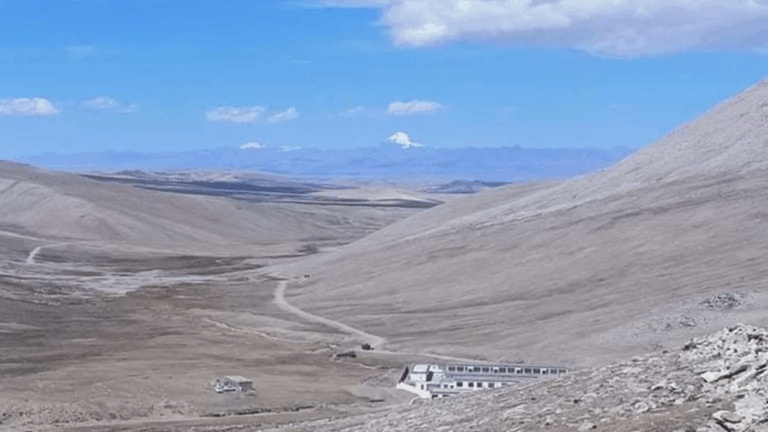
In early 2025, China and Nepal launched a comprehensive re survey of their 1,389-kilometre Himalayan border—the first such exercise since 2011. The joint effort, conducted under the provisions of the 1963 Boundary Protocol and revitalized through a bilateral understanding reached in June 2024, is framed as a technical necessity. Yet, the geopolitical undertones cannot be ignored. The question now being asked in Kathmandu, New Delhi, and beyond is whether this effort marks a mere cartographic modernization—or a more calculated strategic overture by Beijing.
This re survey has emerged from the revival of the long-dormant Joint Expert Group, a bilateral mechanism that had fallen silent since 2006. Its recent activation comes with renewed energy. With both governments formally agreeing to resume ground work, teams of technicians equipped with satellite imagery, GPS instruments, drones, and digital cartographic tools began conducting on-site inspections of boundary pillars in early 2025. Chinese mapping experts, who possess a far superior technological edge, have been working alongside Nepali surveyors, ostensibly under the spirit of mutual cooperation. However, Nepalese stakeholders have expressed concern about the asymmetric nature of this collaboration—particularly the fear that technical superiority may translate into quiet leverage over physical terrain.
For Kathmandu, the official narrative is one of modernization and clarity. Nepalese authorities have emphasized the survey’s potential to resolve minor discrepancies, update outdated maps, and facilitate future infrastructure planning in remote Himalayan regions. This includes better management of border crossings and improved access for development projects that traverse difficult topography. More importantly, government representatives point to the need to regularize trans-Himalayan trade corridors, particularly as Nepal’s reliance on China for trade diversification grows in the aftermath of its ruling leaders favouring Beijing due to political likeness.
Despite this, the re survey has reawakened some longstanding concerns. Several areas remain disputed, notably the location of pillar No. 57 in Dolakha, discrepancies in Humla district, and disagreements in the Gorkha region. In these places, uncertainty over the precise boundary line leaves room for friction—not only between locals and authorities but also in terms of international diplomacy. A more recent concern emerged in June 2025, when pillar No. 71 near Kimathanka in Sankhuwasabha was buried due to a monsoon-triggered landslide. The replacement of this marker—how, where, and by whom it is reinstalled—will serve as a litmus test of the spirit of joint management or potential unilateral overreach.
What complicates the matter is the simultaneous rise of large-scale Chinese infrastructure projects. The re survey is occurring alongside China’s push to integrate Nepal into its Trans-Himalayan Multi-Dimensional Connectivity Network. This includes the much-publicized Gyirong–Kathmandu railway line, for which feasibility studies are already underway and projected for completion in 2026. The re survey, by refining boundary coordinates and validating terrain assessments, supports these infrastructure plans both technically and diplomatically. Analysts suggest that the mapping exercise serves more than just border clarity—it is foundational to unlocking routes for Chinese investment and logistical presence in Nepal’s northern districts.
Public perception in Nepal mirrors this ambivalence. While many welcome the potential for improved connectivity and development, skepticism persists. A recent poll conducted in Kathmandu in March 2025 found that 61 percent of respondents viewed trade and investment as the most valuable aspect of Nepal–China relations, but only 42 percent considered the bilateral relationship “strong,” compared to 57 percent who felt similarly about ties with India. This suggests that while Beijing’s material contributions are appreciated, they have yet to foster the same level of political or emotional trust that India retains. The political class in Kathmandu is therefore walking a tightrope—eager to harness the benefits of Chinese cooperation without ceding perceptual or territorial ground.
India, meanwhile, is watching closely. The Sino–Nepali re survey has come at a time when Kathmandu’s own boundary tensions with New Delhi—particularly in the Kalapani–Lipulekh region—remain unresolved. Any perceived tilt toward Chinese narratives, especially if tied to digital mapping or the reinterpretation of pillar positions, could exacerbate tensions with India. New Delhi’s strategic concern centers around whether this re survey offers China more than data: it may offer leverage in the form of terrain familiarity, the legitimization of strategic infrastructure, and a deepening presence in Nepal’s northern periphery.
Further complicating the picture is the issue of transparency. China’s prowess in geospatial intelligence, artificial intelligence, and surveillance capabilities is widely acknowledged. The concern within Nepal’s civil society and policy circles is that unless both parties are operating with equal access to mapping data, satellite imagery, and interpretive tools, the process might inadvertently cede informational sovereignty to Beijing. Nepalese lawmakers have demanded that any boundary-related agreements, particularly the proposed “Boundary Management System,” be formally ratified through Parliament and anchored in national law, not merely as memoranda. The public release of digital maps, field updates, and raw survey data has been requested by multiple transparency advocates, yet the details remain mostly behind closed doors.
How Kathmandu and Beijing manage these sensitivities in the coming months will be telling. For example, the fate of the buried pillar in Kimathanka could set a precedent. If replaced jointly with public oversight and documented GPS coordinates made available to Nepal’s Survey Department and legal entities, it may reinforce mutual trust. However, if Chinese teams act independently or if mapping data is withheld or quietly revised, it would bolster narratives of cartographic intrusion. Similarly, if the Boundary Management System is passed through Nepal’s Parliament with full legal scrutiny, it will be seen as a sovereign endorsement. But any attempt to institutionalize new mapping standards through executive fiat may spark opposition, especially if linked to infrastructural projects involving land reallocation.
What bears close watching is how this re survey becomes functionally integrated into Nepal’s broader policy trajectory. Should the updated boundary lines be used to expedite approvals for Chinese-built infrastructure—roads, railways, power corridors, or data cables—it will signal that the cartographic effort is not isolated, but deeply enmeshed in Beijing’s regional strategy. If those infrastructures are followed by increased security presence, surveillance installations, or joint patrol agreements, it may well amount to a silent shift in influence along Nepal’s northern flank. This would almost certainly prompt a countervailing response from India, either through intensified infrastructure construction in the Uttarakhand–Sikkim belt, or more active engagement with Nepal in cartographic, trade, and defense cooperation.
Ultimately, the re survey reveals far more than boundary stones—it maps the contours of a strategic moment. As geopolitical competition tightens in the Himalayas, even technical exercises are layered with meaning. For China, this re survey is a soft power tool, a developmental enabler, and a strategic overture all at once. For Nepal, it is a test of capacity, clarity, and sovereignty. The technology involved—whether satellite imagery, drones, or GIS overlays—is not neutral. It is shaped by who controls it, how it is interpreted, and what flows from it.
Nepal’s best course is to ground the process in public transparency and legal legitimacy. Parliament must play a role in scrutinizing boundary adjustments. Civil society must be allowed to examine cartographic outcomes. Survey data should be co-owned and co-analyzed, not asymmetrically provided. Infrastructure projects arising from the survey must be framed in national development plans, not merely bilateral blueprints.
Whether this is a cartographic invasion or strategic overture is not determined solely by China’s intent, but by Nepal’s response. If it demands equity, asserts process ownership, and ensures that updated maps are used for national—not foreign—interests, the re survey could be a model for 21st-century boundary governance. But if opacity triumphs over openness, or if terrain becomes another vector of dependency, the re survey may in time be seen as the quiet moment when geopolitics shifted—measured not by troops or treaties, but by coordinates etched into Himalayan soil.

Samayeta Bal (LAMP Fellow 2024-25)
An advocate and a public policy professional with penchant and knowledge of both the worlds. She writes in topics pertaining to public policy, geopolitics and international relations.
