
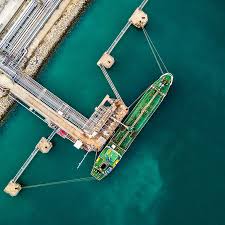
The few stereotypes that persist regarding the Gulf are of its importance as a hydrocarbon centre over the past eight decades, since Bahrain and Saudi Arabia struck Oil in the 1930s. Oman, in comparison, struck Oil in Fahud in 1962, and shipped its first container from Mina Al Fahal in 1967. The oil revenues formed the bedrock of rebuilding the country during the 1970s, during which the Dhofar rebellion was still on. Oman is a Shell country, like Brunei, where Shell has been strategic in the country’s hydrocarbon exploration through a major stake in Petroleum Development Oman, or PDO, as commonly known. Many PDO employees have worked for Shell Brunei and Shell Sarawak as a part of their career circulations in the global MNC network.
Oman was never a massive producer of petroleum as its wealthier neighbours in the GCC, even though its natural gas imprint is significant. Natural Gas is a key transition fuel, and Quriyat LNG in Sur has many long-term contracts with Korea, China, and Japan. However, Oil and Gas still form a major chunk of the GDP in Oman. Diversification has been on the agenda since the late 1980s, as localisation has always been a priority. Years of peak oil prices have led to the creation of avant-garde infrastructure and the education of a couple of generations overseas on scholarships, which was a byproduct of oil income. Now, the scenario has evolved as Oman’s population has increased, and the youth seeking work is often the refrain, as gauged from the comments section in the social media feeds. The cause of the Arab Spring protests in Sohar was corruption and lack of jobs, which led to a few heads turning.
The post Sultan Qaboos era, under the able leadership of His Majesty Sultan Haitham Bin Tarik has moved towards diversification in a major way, seeking relationships far and wide. His Majesty has had meetings with the Dutch Leadership, President Putin in Moscow, Prime Minister Modi in Delhi, and the UK Minister Starmer within the past few months. The rich legacy of Oman being the Switzerland of the Middle East helps in its vital role in mediating the Yemeni crisis and as a trusted participant in the Iran paradigm, helps. Oman also controls half of the crucial Straits of Hormuz.
Ibadhi Oman’s history as a littoral maritime empire has its long shadow in the present. Muscat is a diverse place, full of Zanzibaris, Baluchis, Ajmi’s, Lawati’s, and Hindu Bania’s, and other communities who were a part of the Omani imperial grid. The strategic culture of the Omani elite is transnational, with many Omani having ties across East Africa to Africa. Pankaj Khimji, an advisor to the Omani government, is a key Bania interlocuter between Muscat and Delhi via Mandvi. India and Oman have finalised the FTA negotiations recently. Aden was governed by the Bombay Presidency until 1937. These close ties entail prospects of power being exported to India/ Pakistan/East Africa via a subsea cable in the future.
The engineering and program management excellence achieved by the national building efforts of PDO, especially in terms of talent development for the renewable sector, over the past decades. The first solar project was helmed by PDO as seen in the Amin Solar project. This is similar to the Aramco State, where the best expertise in Saudi Arabia lies with the engineers in the oil major. A glimpse of it was illustrated in Ellen R Wald’s book[1], which showed the role National Oil Companies have played in nation-building.
Oman’s location as an Indian Ocean actor was confirmed with it hosting the Indian Ocean Conference this year in Muscat, where Member of Parliament Naveen Jindal ji spoke. Jindal operates one of the largest steel mills in the Middle East in Sohar. The ACME Group is coming up with a green hydrogen facility in the special economic zone in Duqm on the Arabian Sea coast. Duqm is also home to a naval base, which plays host to many navies, as it is close to the Horn of Africa piracy corridor.
The green hydrogen corridor in Al Wusta and Dhofar is underway as ACWA Power from Saudi Arabia is investing in a green hydrogen facility in the southern Dhofar region. Another ACWA Power project in the form of Ibri 2 IPP is a project I know rather intimately. I was the lead social specialist for an impact assessment report for a multi-million-dollar 500MW solar park on the Saudi border. Long-term migrant workers from South Asia were identified as camel farmers in the desert on project land., However, during a recce visit and after speaking to long-term migrant workers looking after camels, we discovered that they were extremely precarious, relying on a solar-powered battery charger for mobile phones and to light a bulb. These workers, who were heavily reliant on precarious work, were being moved away from their off-grid homes to build a Chinese-funded solar park in relatively prosperous Oman. The irony was not lost on me. Globally accepted ESG governance norms kicked in, the move triggered an independent Resettlement Action Plan for these workers. Climate and Local developmental politics intersect in the middle of nowhere. The Beijing-based Asian Infrastructure Investment Bank or AIIB is the backer for the Ibri 2 Project, and Chinese contractors were the hands on Ibri 2. Belt and Road is right on our doorstep. Indian Engineers and Consultants work on these Chinese-funded projects as the technical hands behind the scenes.
There are numerous other solar projects in the pipeline in the Wilayat of Manah. These areas are close to the Saudi Border and could be a part of an integrated GCC power grid. Oman’s great strength in terms of land needed for renewable projects is a plus, along with its positioning between the Gulf, South Asia, and East Africa, which makes it an Indian Ocean Green Hub[2] in the making.
[1] https://www.amazon.in/Saudi-Inc-Arabian-Kingdom%60s-Pursuit/dp/168177660X
[2] https://mem.gov.om/en-us/Our-Business/Renewable-Energy-and-Hydrogen/Renewable-Energy-and-Hydrogen-Projects
Authored By:
Manishankar Prasad
PhD Scholar, University of Malaya
