
RLA x GWAFI Press statement
Red Lantern Analytica & Greater West Asia Forum, India Organise Seminar on “Exploring a New Strategic Geography in India–West Asia Relations: Coalitions, Connectivity and Converging Interests”
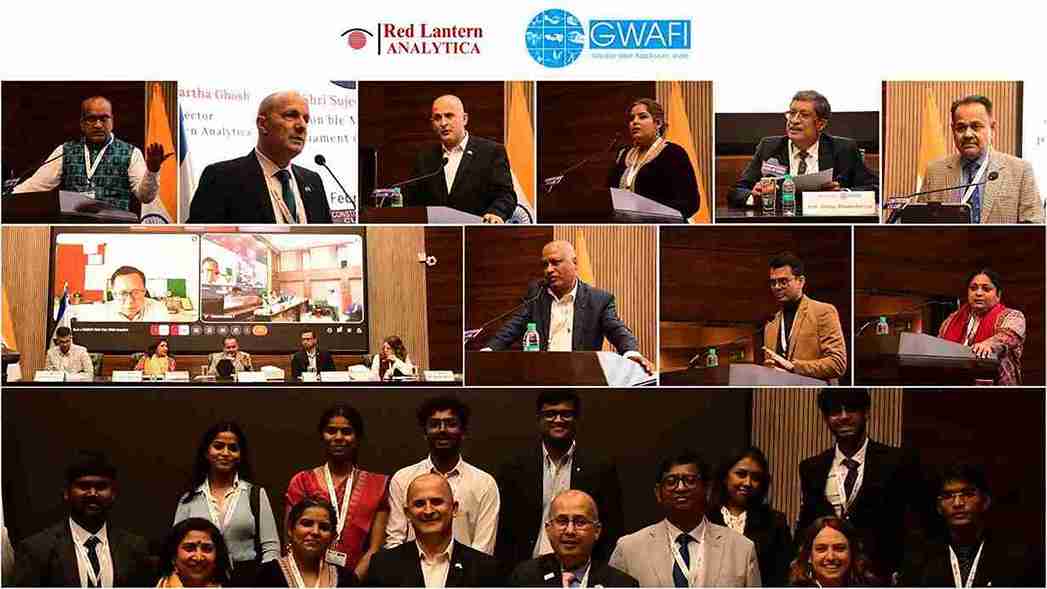
On 12th February 2026, Red Lantern Analytica (RLA), in collaboration with the Greater West Asia Forum, India (GWAFI), successfully convened a high-level seminar titled “Exploring a New Strategic Geography in India–West Asia Relations: Coalitions, Connectivity and Converging Interests.” The event brought together diplomats, policymakers, scholars, strategic practitioners, and students to deliberate on the evolving contours of India’s engagement with West Asia amid changing geopolitical realities.
The seminar examined emerging strategic frameworks, evolving security architectures, geoeconomic realignments, and people-centric cooperation shaping India–West Asia relations in an era defined by multipolarity, technological transformation, and new connectivity initiatives.
Inaugural Session
Delivering the welcome remarks, Dr. Siddhartha Ghosh, Director, Red Lantern Analytica, emphasised that while the idea of a “new strategic geography” has increasingly entered policy discourse, it is yet to be fully defined and conceptualised. He highlighted how digital connectivity, joint investment frameworks, and emerging economic corridors have transformed connectivity into a strategic instrument rather than merely an economic mechanism. According to him, coalitions emerging across maritime security, regional stability, and counter-terrorism demonstrate that connectivity now functions as a stabilising force, with India representing scale, reliability, and strategic continuity.
The inaugural address was delivered by H.E. Ambassador Reuven Azar, Ambassador of Israel to India. He highlighted India’s rapid rise as a global power and noted that this transformation presents significant opportunities for Israel and the wider West Asian region. Ambassador Azar spoke about evolving economic chains linking India with Saudi Arabia, the UAE, and Israel through new trade corridors and partnerships, reflecting the increasing integration of regional economies. While acknowledging persistent regional tensions, he emphasised West Asia’s enduring strategic importance in global trade, labour mobility, and economic connectivity. A central theme of his address was the deepening mutual trust between India and Israel, reflected in growing cooperation across infrastructure, finance, and strategic sectors. He expressed optimism regarding the potential signing of a Free Trade Agreement between the two countries in the near future. He concluded by emphasising that regional cooperation remains essential for ensuring prosperity and long-term stability.
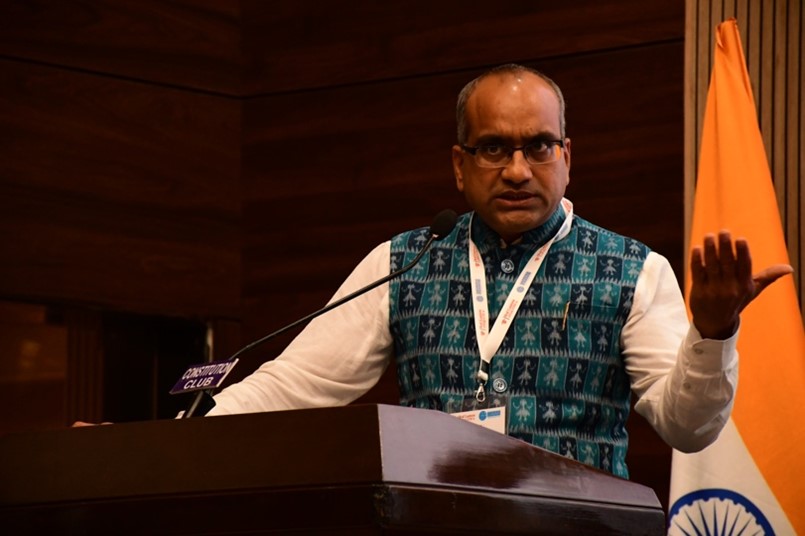
The Chief Guest Address was delivered by Shri Sujeet Kumar, Member of Parliament (Rajya Sabha), who highlighted the strengthening India–Israel partnership and its growing strategic significance. He noted India’s expanding influence in West Asia and described contemporary relations as moving towards deeper diplomatic and technological collaboration. The address underscored cooperation in clean energy, innovation, and defence as key pillars of the relationship, while also stressing the importance of investment in research and development to sustain strategic advancement.
Dr. Manjari Singh, Founding Member of GWAFI and Associate Professor, MRIIRS reflected on the evolution of India–West Asia relations and emphasised the multidimensional nature of contemporary engagement. She highlighted that West Asia remains India’s extended neighbourhood, marked by increasing high-level exchanges, expanding economic cooperation, and growing collaboration across both conventional and non-conventional domains.
Session I: Security, Coalitions and Converging Strategic Interests
The first plenary session examined evolving regional security dynamics and coalition-building across West Asia and the Indian Ocean region. Discussions focused on emerging security architectures, maritime cooperation, and the growing relevance of multilateral engagement in addressing shared challenges. Speakers explored how new frameworks are reshaping strategic alignments, including the complexity of bringing diverse actors together within cooperative structures. Themes such as maritime security, strategic autonomy, connectivity as a security enabler, and the role of India as a stabilising diplomatic actor were highlighted. The session also addressed the implications of regional power competition, shifting alliances, and the need for diversified engagement mechanisms to respond to contemporary security challenges.
Session II: Trade, Connectivity and Geoeconomic Realignments
The second session explored the geoeconomic transformation shaping India–West Asia relations. Discussions highlighted how economic engagement is expanding beyond traditional energy trade towards technology partnerships, supply chain integration, renewable energy collaboration, migration frameworks, and food security cooperation. Speakers examined the strategic importance of emerging corridors such as IMEC in connecting India with Europe through West Asia, positioning the region as a critical bridge between markets. The session also analysed the evolving role of global powers, including the United States, in shaping regional economic and security frameworks, as well as the challenges posed by geopolitical rivalries and economic competition. Participants emphasised India’s growing technological capabilities, diaspora influence, and expanding defence cooperation as key drivers of future engagement.
The seminar concluded with reflections by Mr. Fares Saeb, Deputy Chief of Mission at the Embassy of Israel in New Delhi, who addressed contemporary challenges in narrative warfare and the evolving role of digital platforms in shaping global political discourse. He highlighted the need to address radical narratives circulating through social media ecosystems and emphasised the importance of decriminalising harmful ideological content while fostering constructive dialogue. Mr. Saeb also discussed how social media-driven dynamics influence perceptions of international partnerships, including India–Israel relations, and underscored the importance of strategic communication in an increasingly multipolar world. He noted that India’s evolving multipolar strategy positions it uniquely to engage diverse actors while maintaining strategic autonomy.
The seminar reaffirmed the growing importance of India–West Asia relations in shaping emerging global strategic landscapes. By bringing together diplomatic voices, academic perspectives, and policy expertise, the event highlighted the need for sustained dialogue on security cooperation, connectivity frameworks, and geoeconomic transformation.
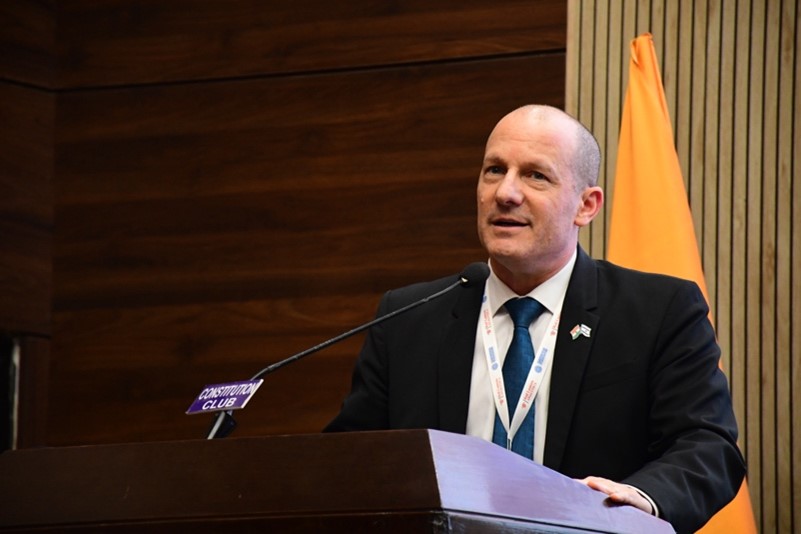
H.E. Reuven Azar
Shri Sujeet Kumar
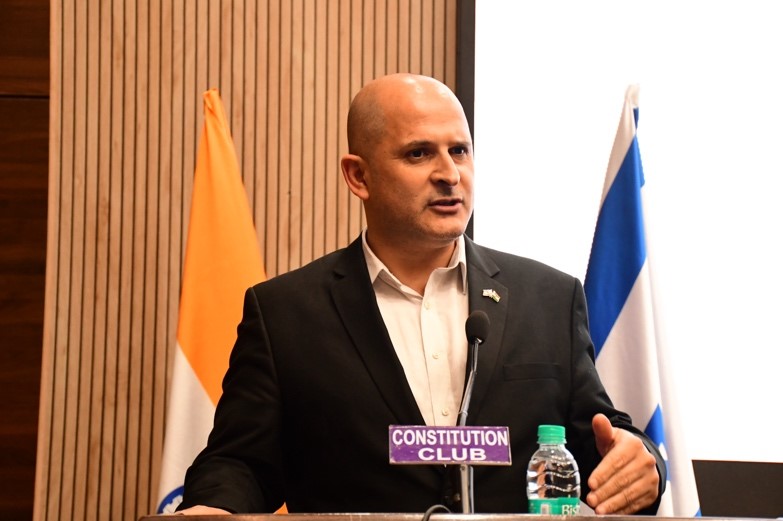
Mr. Fares Saeb