
Importance of India and East Asia Cooperation in Higher Education, Research and Development, and the Skilling of Labour
Prof. Tridivesh Singh Maini
Assistant Professor of Diplomatic Practice &
Assistant Dean (International Collaborations)
Introduction
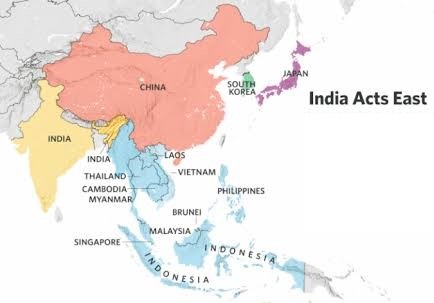
In the past thirty years, India and the countries in East and South East Asia have strengthened their economic ties. Within the current geopolitical and economic context, a number of ASEAN member states, as well as countries in East Asia, have started channeling their investments in a limited number of priority areas, with a particular focus on the semiconductors and related domains.
In recent years, India’s semiconductor industry has seen an influx of investment from Japanese, South Korean and Taiwanese companies. As a result, the industrial landscape in a number of Indian states is undergoing transformation, and Indian state governments are proactively engaging in efforts to secure foreign technological investment.
However, financial investments alone will not strengthen these bonds. The depth of the partnership will depend on the collaboration across multiple research and development initiatives and the increase of joint ventures and academic partnerships between Indian and East and South East Asian universities.
Demographic Changes and the Need for Skilled Labor
East Asian countries are experiencing population decline and have an ageing population. One of the outcomes of this trend is the lack of skilled professionals, which is especially evident in the semiconductor and advanced manufacturing industries. As a response to this, universities in Japan, South Korea, Taiwan and other ASEAN countries, including Thailand, have started providing scholarships to foreign students in semiconductor manufacturing related programs. Both Indian students and educational institutions have the potential to take advantage of these offerings.
The same demographic pressures have caused some of these governments to loosen their work visa requirements. Of these countries, India, due to its younger workforce and larger technical education system, has the potential to fill the gap the most.
Why State Level Partnerships are Important
India’s state governments must engage more with Japan, South Korea, Taiwan, and the ASEAN economies, rather than allowing the central government to take the lead. It is at these regional and industrial levels where the most opportunity and benefit is derived. Japan has begun to set these frameworks with Meghalaya and Assam by offering training and skill development programs in preparation for employment in the healthcare sector. This more adaptable and flexible approach can be developed for other states and industries. This is more important and necessary in regions which have primarily sought education and employment in the Anglosphere. A prime example of this is Punjab. Many of Punjab’s students have been denied Post Graduation Work Permit applications by Canada. Many state politicians, including Sukhbir Singh Badal, president of the Shiromani Akali Dal and former Deputy Chief Minister, and senior Bharatiya Janata Party leader Sunil Jakhar, have asked the central government to take this issue to Canada. With increasing restrictions and regulations on student and work visas in the Anglosphere, Punjab should consider looking towards the East and pursuing their training and skill development programs with Japan and South Korea.
Andhra Pradesh as a Case Study
Andhra Pradesh illustrates a particularly developed model of what this type of engagement can entail. During a recent trip to the state, a Taiwanese delegation had a meeting with Chief Minister Chandrababu Naidu, and expressed their desire to grow their presence in the state. The delegation included Delta Electronics, BenQ, CTBC Bank, DIMERCO, Sheng Huei Tech, Tech Top Engineering, K.S. Terminals, and Sandsun.
The Chief Minister stated the priorities of the state in electronics, semiconductors, and IT, and cited the state’s connectivity, logistics, and adaptive policies as options for an investor’s assurance to commit.
The delegation also had a separate meeting with the state’s Minister of IT and HR Development, Nara Lokesh, and stressed the importance of equipping the youth of Andhra Pradesh with job prospects in Taiwan. They discussed training programs incorporated with industry, educational collaborations, exchanges of students and faculty, industry certifications, as well as Mandarin training.
One month prior, Lokesh made a similar proposition to Seong Dong Lee, Chief Executive Officer of the Korean company APACT, which specializes in equipment for the testing and packaging of semiconductors, during their meeting.
That proposal now has an industrial anchor. On August 1, Prime Minister Narendra Modi inaugurated ASIP Technologies’ semiconductor manufacturing plant in Tarluvada, Visakhapatnam. The ₹2,500 crore project will be the first outsourced semiconductor assembly and test facility in Andhra Pradesh and in South India approved under the India Semiconductor Mission.
APACT is the technology partner for the project that will be built on a 30-acre campus with an initial investment of over ₹460 crore. The company has also been strengthening its ties with the Indian Institute of Technology (IIT) Tirupati, and the Indian Institute of Technology (IIT) Hyderabad.
Seong Dong Lee has said that the “Korean technical know-how combined with Indian Engineering” is the construction of the facility in India. Venkata Simhadri, Managing Director and Chief Executive Officer of ASIP, has said that the facility is establishing the advanced assembly, packaging, and testing in India while also developing the needed skills and providing the opportunity to make Indian supply chains and the Andhra Pradesh semiconductor ecosystem grow and develop.
The Case for Branch Campuses
Investment and skills initiatives would be significantly enhanced by a sustained scholarly presence. Given the locations of new industrial assignments, there is ample opportunity for the establishment of branch campuses in India by the universities of Singapore, Japan, South Korea and Taiwan.
When Chandrababu Naidu travelled to Singapore in June 2026, he encouraged the National University of Singapore to open their first overseas campus in Andhra Pradesh. Later in June 2026, university representatives were a part of a delegation from Singapore that travelled to Andhra Pradesh.
Satellite campuses are significant in ways that research scholarships and short-term training modules are not. They localize research, retain talent, and connect the industry and the academic field.
Conclusion
The connection between the beads of India and East and South East Asia will strengthen over the years to come with the joint interest in the fields of new technologies and advanced manufacturing. At this point in time, the focus is on whether the skilled workforce of professionals and the students from India will have the ability to access the new openings in the field of education and employment. The problem is compounded by the fact that the whole Anglosphere, and not only the USA, is decreasing the range of job and student visas, and also implementing more severe controls on immigration. Therefore, the need to diversify is no longer optional, and is a case of survival. Achieving this will require all participants to maintain the same level of commitment over time. Different government levels, representative bodies, universities, and research institutions will have to work together.
